
Lesson 1 — 1788–1789 and 1792: Every Vote for One Man
Electors, Two Votes, and the First President
Watch first
George Washington Won 69 of 69 Electoral Votes in 1789
John Adams Became Vice President With Just 34 Votes in 1789
Why Washington's 1789 Election Results Took 61 Days to Count
Electoral College and the Election Ties
Picture yourself as one of 69 men. You are a presidential elector in the first election the United States ever held. In your hand you hold two votes. Both votes are for president. The man with the most votes will be president, and the man in second place will be vice president. Now the votes are counted. Every one of the 69 electors has used one of his two votes for the same man: George Washington. How does a brand-new country with no president choose its first one? And why did the men who wrote the rules refuse to let the people choose by a simple show of hands? Here is what was at stake. In 1787, our Founding Fathers met in Philadelphia to build a government that could last. If the first election failed, the Constitution might fail with it. At MockElection.com we want to make you a scholar of the republic. Let's see how a free people chose.
Two Old Republics
The Founding Fathers who met in Philadelphia in 1787 are also called the Framers, because they framed the Constitution: they built its structure the way a carpenter frames a house. They were not starting from nothing. They had read about two older free peoples, and they compared them closely. One was Athens. The other was Rome.
In Athens, after the reforms of Cleisthenes in 508 BC, the citizens governed themselves directly. They gathered in an assembly called the Ekklesia. There, the citizens who showed up voted on laws and on what the government should do. The majority of those present decided. This kind of rule is called direct democracy: the people vote on everything .
Rome did something different. The Roman Republic began around 509 BC and lasted until the rise of the Roman Empire in 27 BC. Rome spread power out among several groups. Voters elected officials called magistrates, such as the two Consuls. Popular assemblies voted. And there was the Roman Senate. It was a council made mostly of experienced patricians and former magistrates. The Senate managed the money, dealt with foreign nations, and ran the daily work of the state. A system like this, where power is shared among several bodies, is called a mixed government.
The Founding Fathers worried about direct democracy. They believed a majority with nothing to slow it down would make the government swing back and forth. It would follow every passion of the moment. A faction is a group of people pushing hard for its own side. The Framers had read what a faction, stirred up for a season, could do to good order.
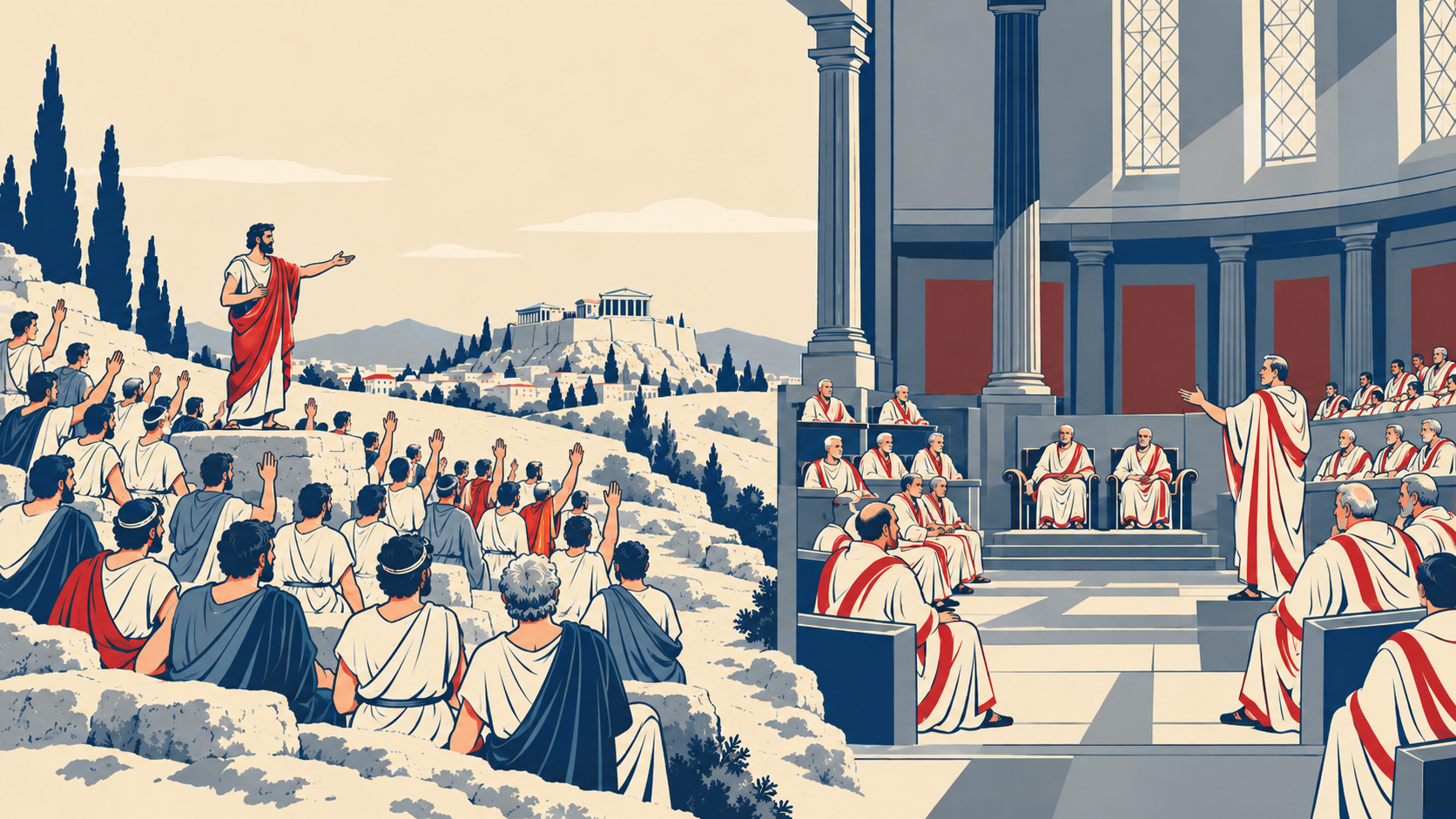
So the Founding Fathers did what careful builders do. They took pieces from both old republics. The people would have the final say, as in Athens. But their choices would pass through representatives and through the states, as in Rome. Nowhere does this show more clearly than in how they chose to pick a president.
You just met two old republics. Which one taught you more about how a government should work?
The Machine in Article II
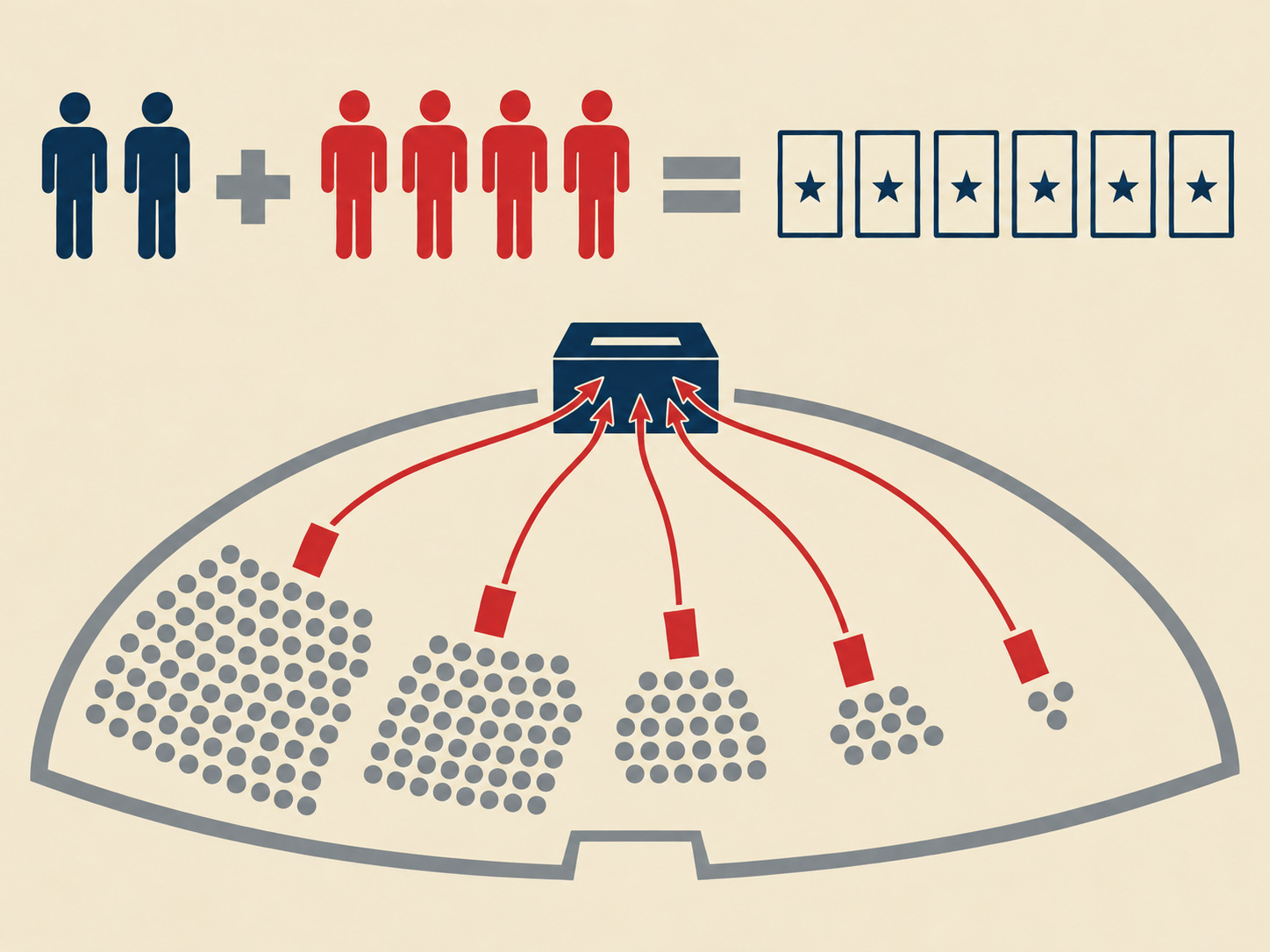
Article II, Section 1 of the Constitution sets up a system for choosing the president. We call it the Electoral College. It works like a machine with a few simple parts.
Each state gets a certain number of electors. An elector is a person who casts a vote for president on behalf of a . The number of electors equals the state's number of Senators plus its number of Representatives in the House. Every state has two Senators. The number of Representatives depends on how many people live in the state. That number comes from the census, the count of the population taken every ten years.
Now ask yourself: what happens if no candidate gets enough electors? The Founding Fathers planned for that too.
To win, a candidate needs a majority of the electors. A majority means more than half. If no one gets a majority, the choice moves to the House of Representatives. This is called a contingent election. "Contingent" means it only happens if something else happens first.
Sixty-Nine for Washington
The first presidential election under the new Constitution ran in 1788 and 1789. No national political party had formed yet. The Federalist Party and the Democratic-Republican Party would not organize until the 1790s.
Sixty-nine electors took part. Under the first rules, each elector cast two votes, and both were votes for president. The man with the most would become president. The man in second place would become vice president.
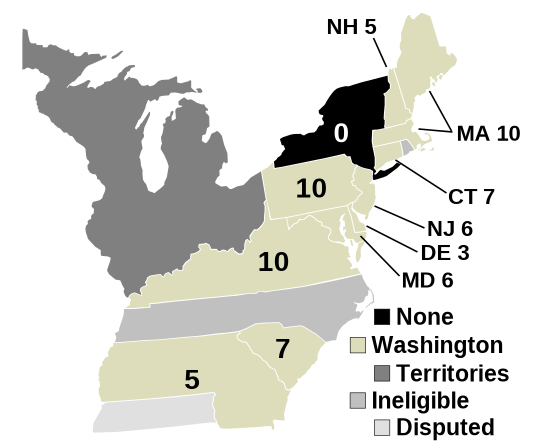
Every elector used one of his two votes for . That gave Washington 69 electoral votes: one from every single elector, or 100 percent. John Adams came in second with 34 electoral votes. Under the rules, that made him vice president.
Four years later, in 1792, Washington did it again. He received all 132 electoral votes cast. This time the electors' second votes split: John Adams 77, George Clinton 50, Thomas Jefferson 4, Aaron Burr 1. Adams stayed vice president.
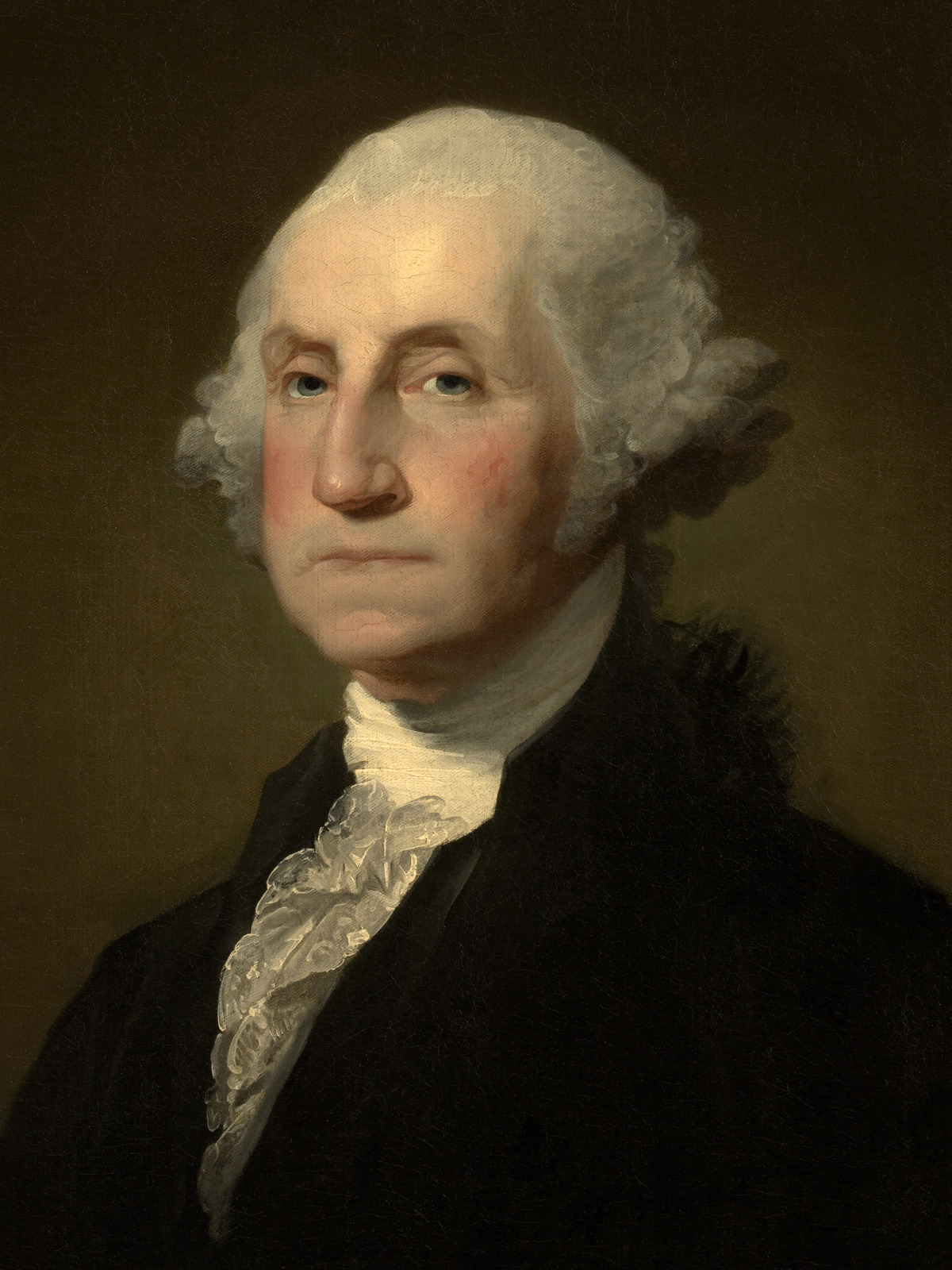
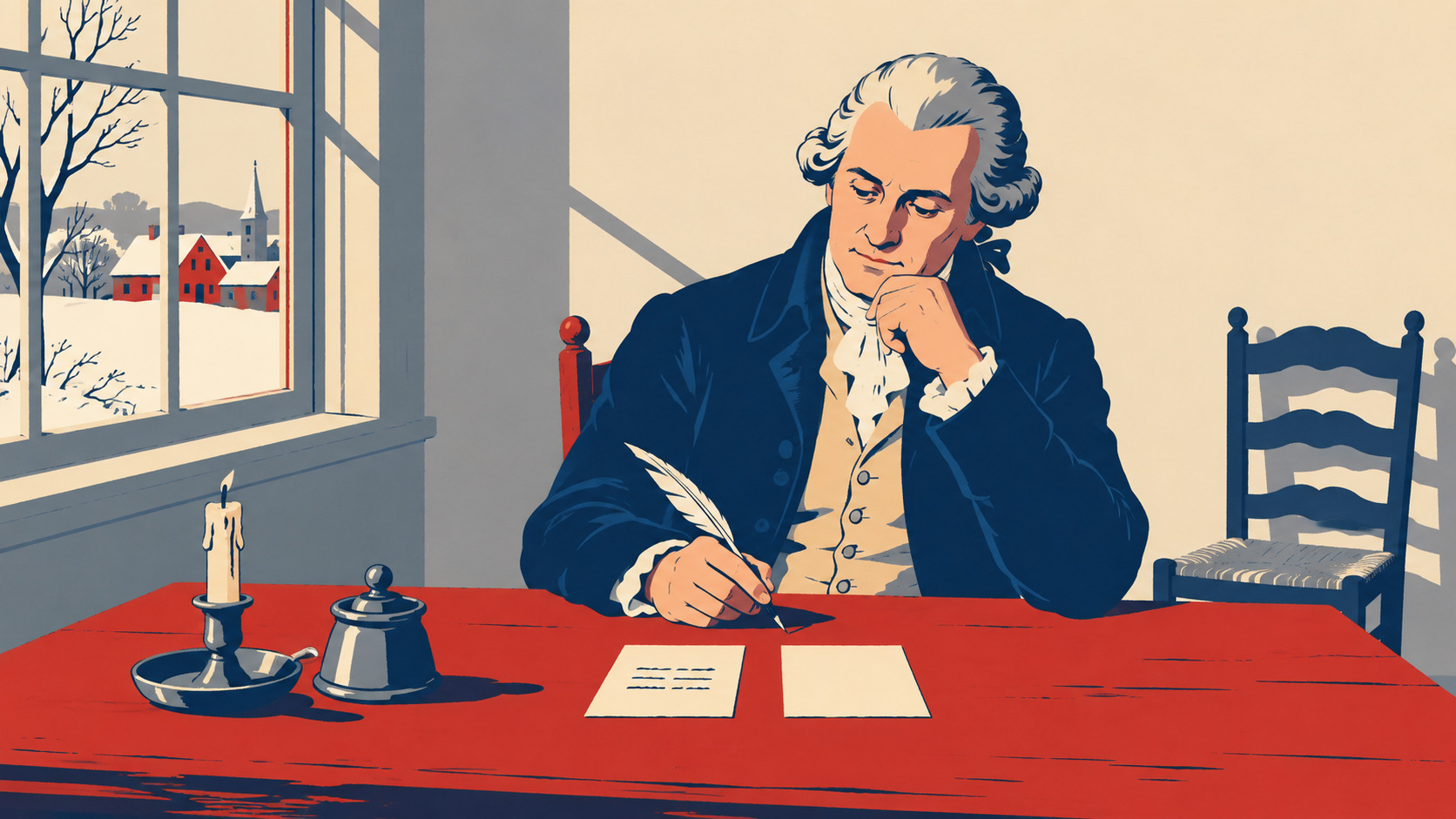
Notice something about those first rules. Every elector cast two votes for president, and nobody marked which vote was for president and which was for vice president. In 1789 that caused no trouble, because everyone agreed on the first name. Even so, Alexander Hamilton saw the risk. He worried that Adams might, by accident, collect as many votes as Washington, so he persuaded several electors to hold back their second vote from Adams. But what if two men on the same side got the same number of votes? Here's where it tightens. The rule that worked for Washington would break in 1800.
Cast the two votes yourself — then see whether your class, like Hamilton, kept Adams one short.
You are one of 69 electors. Cast two votes. Both are for president.
Loading…
The Prudence of Our Founding Fathers
The virtue at the center of this lesson is prudence. Prudence is practical wisdom. It means seeing clearly what a situation needs. Then it means choosing the action that will do the most good , not just today.
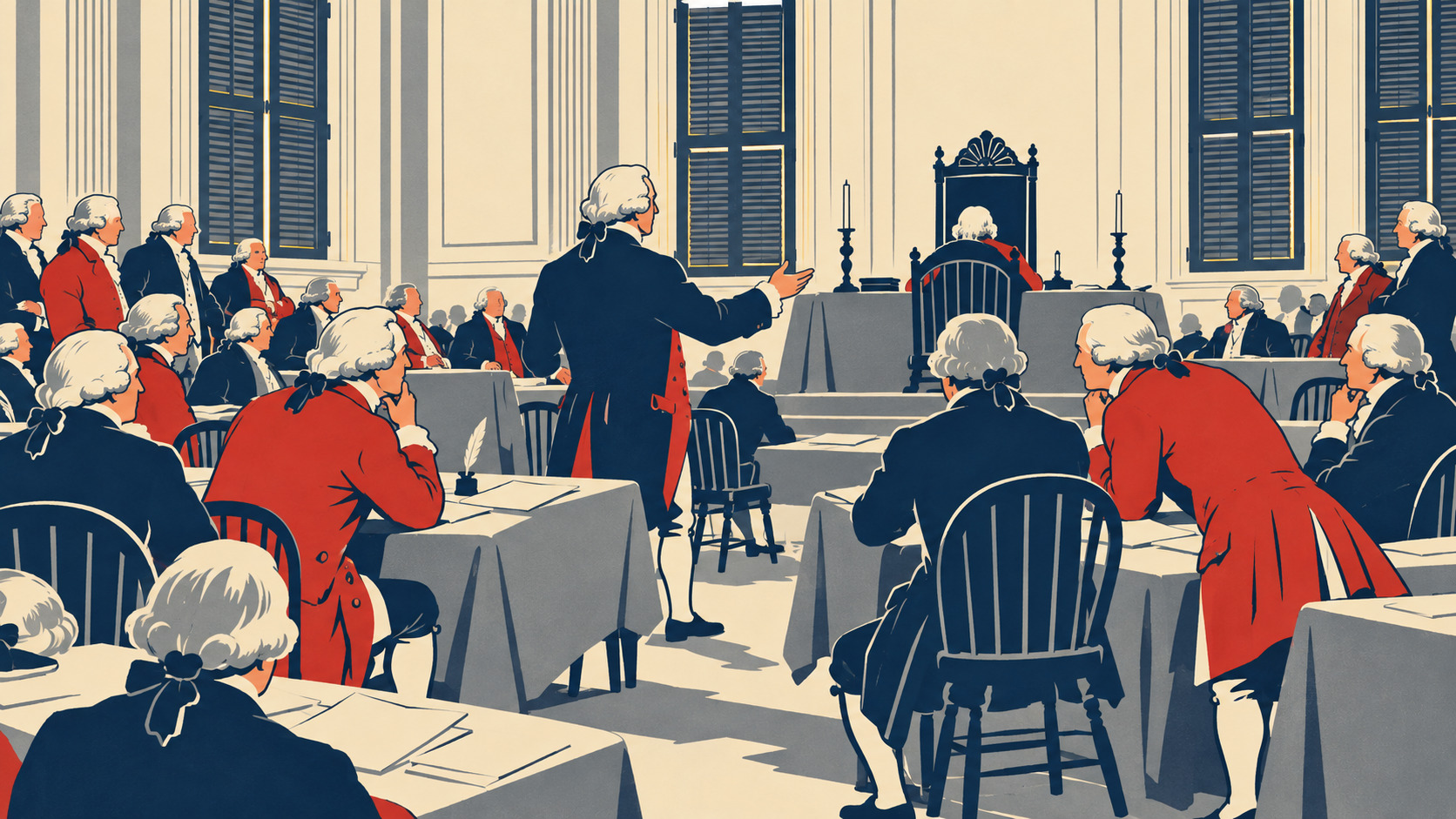
The Framers applied prudence when they built the Electoral College. They knew Athens had given its citizens a direct voice. They also knew Rome had lasted for centuries by sharing power among consuls, assemblies, and a Senate. They did not copy either one. They chose the parts that fit a large country made of many states. They gave the people the final power, but they added steps to slow down sudden passions. And they planned ahead for a tie or a split, with the contingent election in the House.
Aristotle figured this out a long time ago. He taught that practical wisdom is the skill of choosing the right action, at the right time, for the right reason. He also taught that most good choices sit in a middle place. On each side is a mistake: one of too little and one of too much. The Framers wanted that middle place. On one side was a government that obeys every passing mood. On the other was a government that does not listen to its people at all.
Conclusion
Go back to those 69 electors, each holding two votes. Every one of them wrote down the same name. The new machine worked on its first try.
How the map changed. Before 1788, the United States had no president at all. After 1789, it had one, chosen by 69 electors from ten states, with John Adams beside him as vice president on 34 votes. In 1792, the same machine ran again with 132 electoral votes, and it gave the same unanimous answer. The Electoral College, the census formula, and the contingent election were now the rules every later election would follow.
How the republic's character moved. The first two elections showed something about the Americans. They would accept a choice made through their states and their electors, not by one great crowd. They had chosen a republic, not an Athens. Each was one election in the whole true history of the American vote. Each one taught the young country to trust its own rules.
To live well is to choose with prudence — to look past today's mood and ask what will still be good years from now.
Because elections are won and lost.
Parties rise and fall.
But the republic rests on its citizens.
Lesson Summary
Key Terms
- Republic
- a government where the people hold the final power but choose representatives to govern.
- Direct democracy
- a government where the citizens vote on laws and decisions themselves, as in the Athenian Ekklesia.
- Mixed government
- a government that shares power among several bodies, as Rome did with its consuls, assemblies, and Senate.
- Electoral College
- the system in Article II, Section 1 of the Constitution for choosing the president through electors from each state.
- Elector
- a person who casts a vote for president on behalf of a state.
- Census
- the count of the population taken every ten years, which sets each state's number of Representatives.
- Majority
- more than half of all the votes.
- Contingent election
- an election held in the House of Representatives when no candidate wins a majority of electors, with one vote per state delegation.
- Delegation
- the group of Representatives from one state.
- Faction
- a group of people pushing hard for its own side.
- Framers
- the Founding Fathers who framed the Constitution at Philadelphia in 1787 — the men who built its structure.
- Mob
- a crowd stirred up to sudden action, from the Latin mobile vulgus, "the movable crowd."
- Checks and balances
- a design in which each part of a government can stop another part from running away with the whole.
Cause-and-Effect Chart
| Key Fact | The Cause | The Effect |
|---|---|---|
| The Founding Fathers built the Electoral College | They had read what the mob could do in Rome and wanted checks on sudden passion | The president is chosen through state electors, not one national vote |
| Electors equal Senators plus Representatives | The Framers wanted both the states and the population counted | Every state gets at least 2 electors; larger states get more |
| The contingent election goes to the House, one vote per state | The Framers planned for a race with no majority | The states stay at the center of the choice even in a deadlock |
| Washington won 69 of 69 electors | Every elector used one of his two votes for him | Washington became the only president ever chosen unanimously |
| Each elector cast two unmarked votes | The first rules did not separate president and vice president | Second place became vice president — a rule that would break in 1800 |
Timeline
| Person / Event | Date (AD) | Description |
|---|---|---|
| Constitutional Convention | 1787 | The Founding Fathers meet in Philadelphia and compare Athens and Rome. |
| States choose their electors | December 15, 1788 – January 10, 1789 | Ten states name electors; New York fails to agree on its slate. |
| The electors vote | February 4, 1789 | 69 electors cast two votes each; every one gives a vote to Washington; Adams second with 34. |
| Congress counts the votes | April 6, 1789 | The first Congress reaches a quorum and opens the sealed ballots. |
| Washington's inauguration | April 30, 1789 | Sworn in at Federal Hall, New York City, after an eight-day journey from Mount Vernon. |
| The electors vote again | December 5, 1792 | 132 electoral votes, all for Washington; Adams 77, Clinton 50, Jefferson 4, Burr 1. |
| Congress counts the 1792 votes | February 13, 1793 | Vice President Adams opens and reads the ballots as President of the Senate. |
| Federalist and Democratic-Republican parties form | 1790s | The first national political parties organize. |
COMMAND QUESTIONS
Factual Recall
The "Why" Questions
Write a short paragraph answering each question in your own words, in your notebook. Then check its box: +4 each.
Why did the Founding Fathers choose a republic instead of a direct democracy like Athens? Use the text's reasons in two or three sentences.
The first rules had each elector cast two votes for president without marking which was which. Why did this cause no problem in 1789, and why might it cause a problem later?
Cast Your Ballot
You are one of 69 electors. Cast two votes. Both are for president.
Loading…
The ballot: 1788–1789 — President (each elector casts two votes; most votes = president, second place = vice president)
George Washington — no national party had formed — the general who had commanded the army through the Revolution and presided over the Convention that wrote the Constitution; the one name every state trusted
John Adams — no national party had formed (he would later help lead the Federalists) — the Massachusetts statesman who had served the new nation as its minister to Great Britain; the second name on most New England ballots
Also receiving electoral votes: John Jay (9), Robert Hanson Harrison (6), John Rutledge (6), John Hancock (4), George Clinton (3), Samuel Huntington (2), John Milton (2), James Armstrong (1), Benjamin Lincoln (1), Edward Telfair (1)
What an elector knew on February 4, 1789:
- The Constitution had just set up a brand-new office: president.
- Each elector would cast two votes, both for president.
- Second place would become vice president.
- No national political parties had formed yet.
- Ten states had named electors; New York had not.
What the electors decided: Washington, 69 of 69 electors (100 percent); Adams, 34, vice president.
Cast your own ballot on MockElection.com — vote as an elector of 1789, with only what an elector of 1789 knew. Then compare your count to history.
Picture yourself in that Philadelphia room in 1787. How would you have had the country choose its president?
Two games wait below
Whistle-Stop
The lesson’s words, against the clock. Twelve in a row earns the Blue Ribbon.
The Canvass
Match each cause to its effect, then each event to its year. Both boards with one miss or fewer earns the Clean Count.
0 of 100 points
Kept in this browser for this visit. Sign in to keep it on any device.