
Lesson 2 — 1800: Seventy-Three to Seventy-Three
A Tie, a House, and an Amendment
Watch first
The 1800 Election Ended in a 73–73 Tie
The 1800 Election Took 36 Ballots to Choose Jefferson
How One Man Controlled Delaware's Vote in the 1800 Election
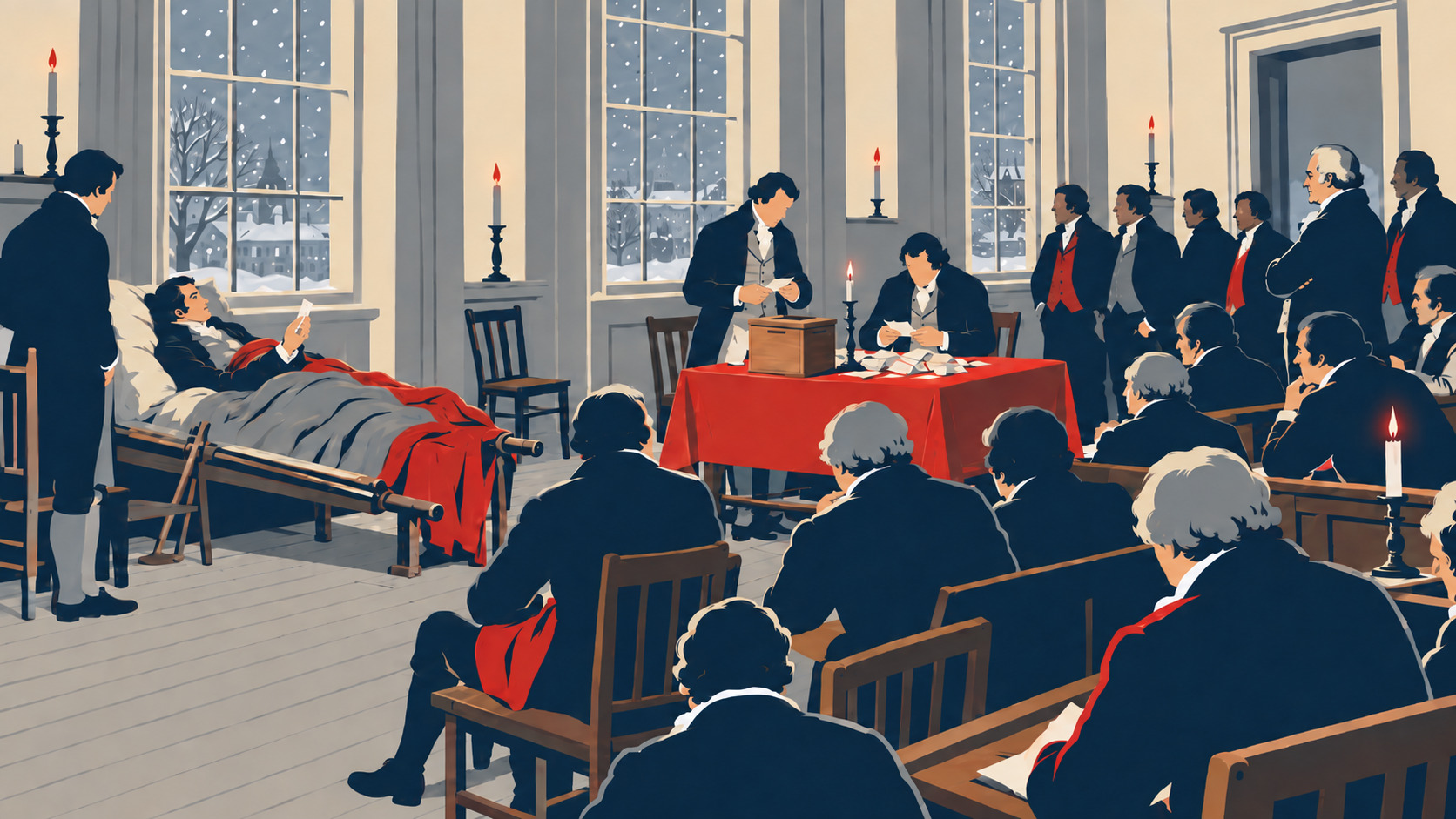
It is Wednesday, February 11, 1801, and snow is falling on Washington. Through the storm, men carry a litter toward the new Capitol. On it lies Joseph Nicholson, a congressman from Maryland, too sick to walk. He has come to cast one vote. Inside, the House of Representatives must choose a president, and the two men tied for the office are not enemies. Thomas Jefferson and Aaron Burr ran on the side, and each has 73 electoral votes. How can a party win an election and still not know who its president is? Here is what was at stake. No sitting president had ever lost an election. The Federalists held the office. The Democratic-Republicans had beaten them in the count. And now a House still controlled by the Federalists held the deciding power over their rivals' two men. At MockElection.com we want to make you a scholar of the republic. Let's see how a free people chose.
Two Parties, Two Visions
As you recall from the first elections, every elector in 1788–1789 gave a vote to Washington before any national party had formed. That changed fast. In the 1790s, two political parties organized, and by 1800 they faced each other for the presidency.
The Federalist Party formed in the early 1790s. Alexander Hamilton and John Adams were its leading thinkers. The Federalists wanted a strong central government. They wanted a busy commercial economy, with the national government helping manufacturing grow. They wanted a national bank. And they wanted a stable relationship with Great Britain.
The Democratic-Republican Party organized in the 1790s under Thomas Jefferson and James Madison. It formed to oppose Federalist policies. Jefferson's party spoke for farmers and farm country. Its members read the Constitution : the national government could do only what the Constitution clearly said. They defended states' rights, the powers kept by the states. And they wanted less power held in the national capital.
In 1800, each party named a ticket: a pair of candidates, one meant for president and one meant for vice president. The Federalists ran President John Adams and Charles Cotesworth Pinckney. The Democratic-Republicans ran Thomas Jefferson, with Aaron Burr as his intended vice president. But the Constitution still had no place for an elector to write which man was meant for which office. Hold on to that.
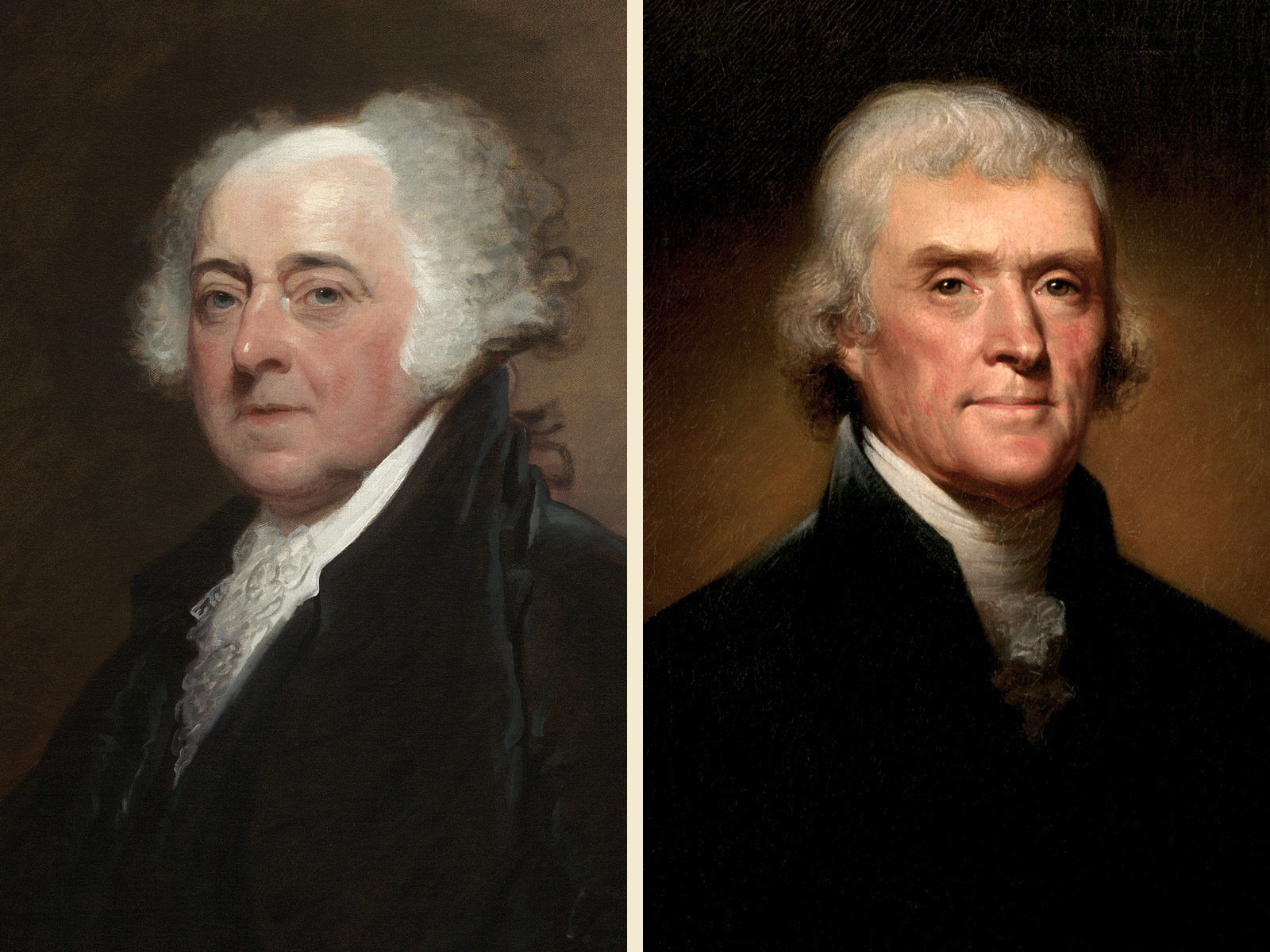
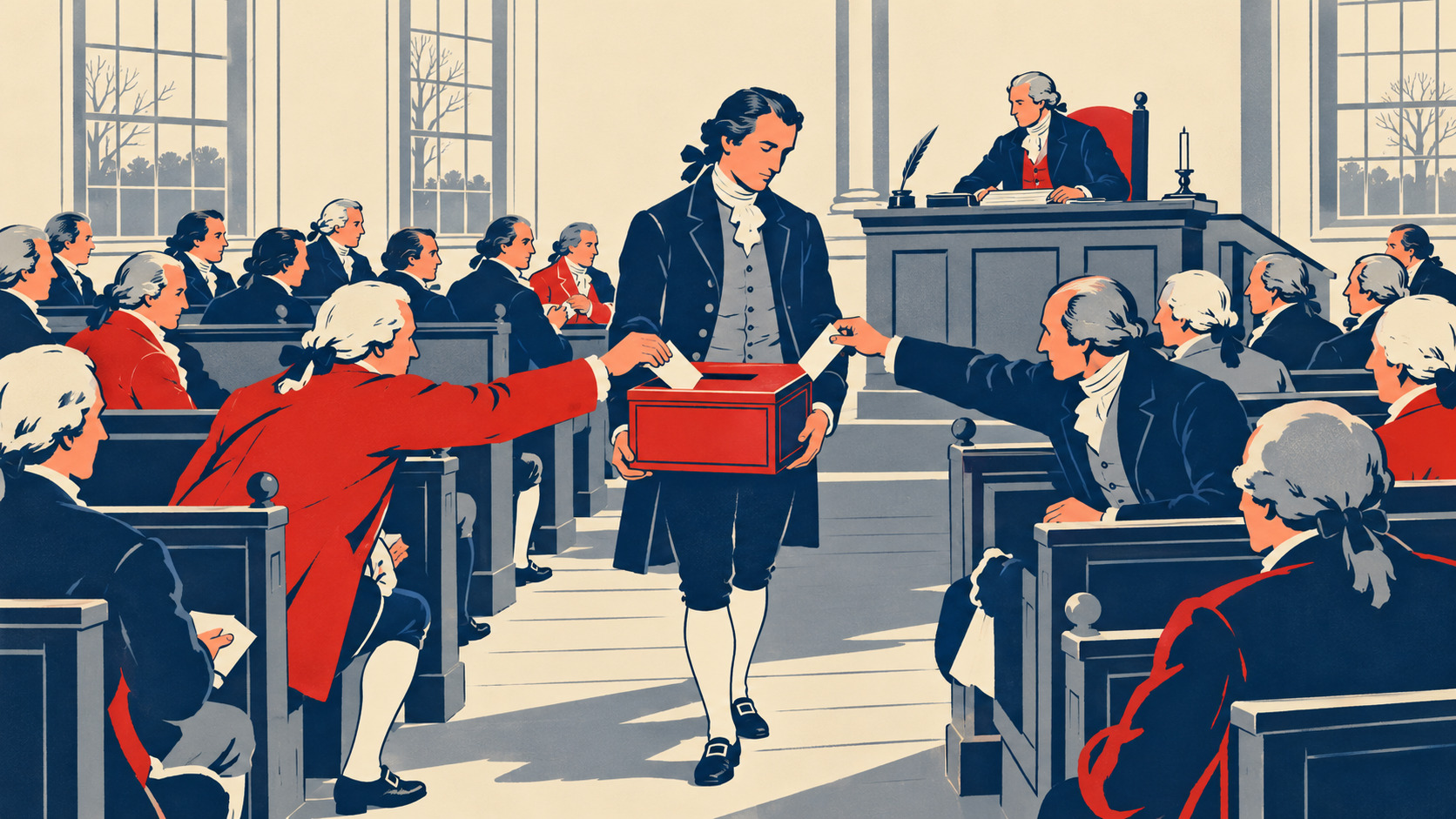
In 1800, many states let the legislature choose the electors. If you lived then, who would you rather have choose your state's electors?
The Tie Nobody Planned For
Remember the rule from the first lesson. Each elector cast two votes, and both were for president. Neither vote was marked for vice president. Most votes won the presidency. Second place won the vice presidency.
Jefferson's party wanted Jefferson as president and Burr as vice president. So every one of its electors cast one vote for Jefferson and one vote for . Do the arithmetic. If every elector on your side votes for both of your men, both men get exactly the same number of votes.
On Wednesday, December 3, 1800, the electors met in their own states and voted. Every state voted on the same day, so no elector knew the national count when he wrote his two names. By mid-December, word was spreading among politicians that the count had come out even. Here's where it tightens. Jefferson received 73 electoral votes. Burr received 73 electoral votes. A tie.
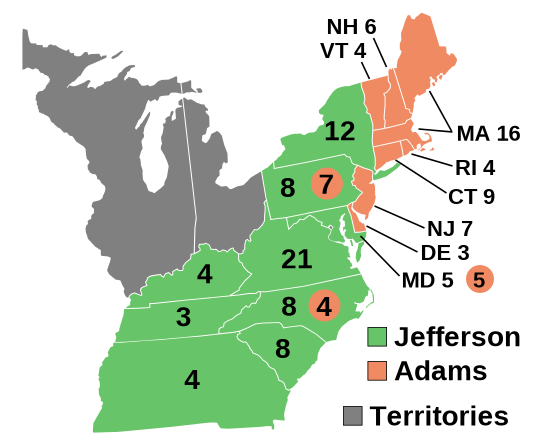
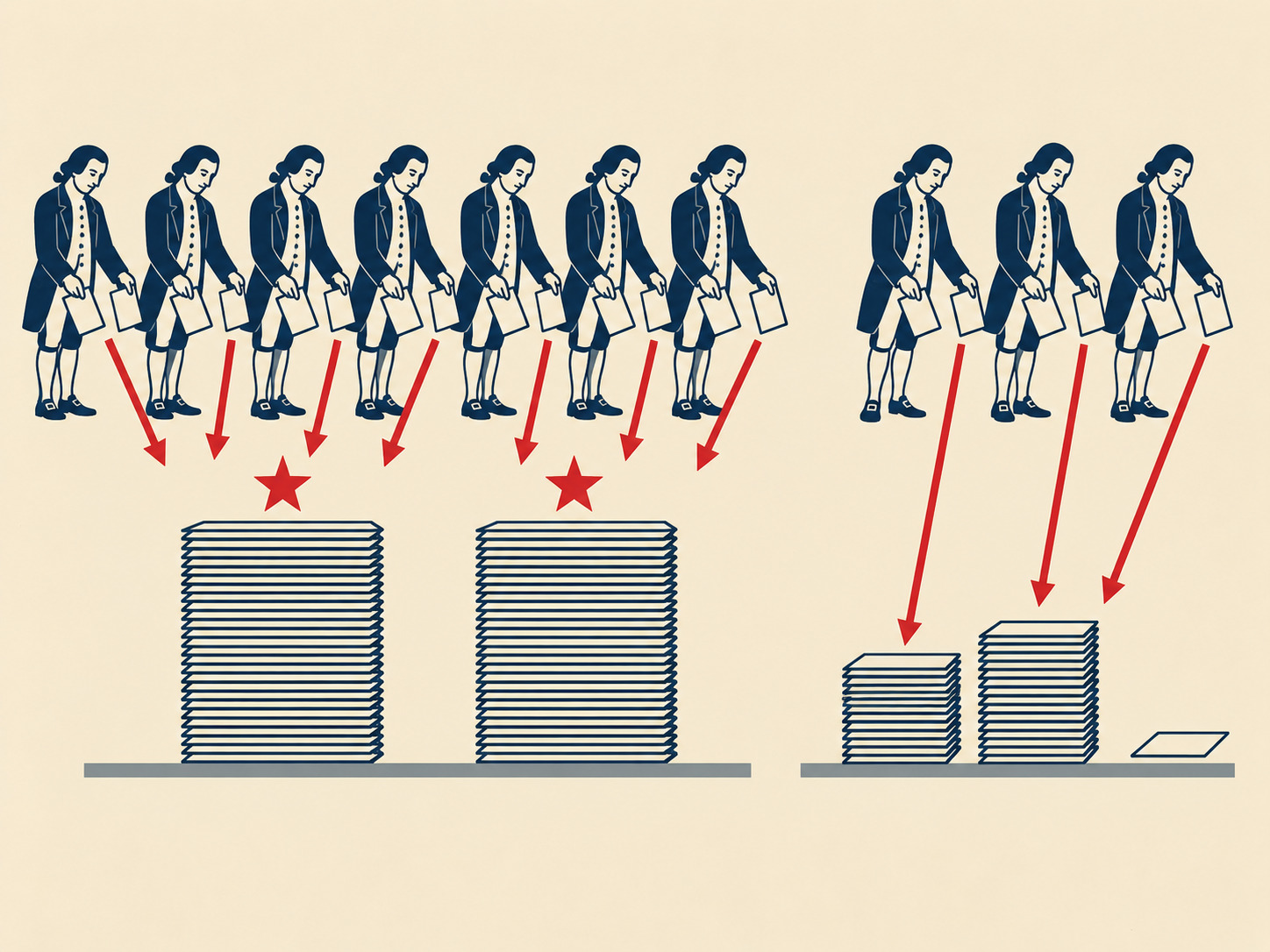
Because Jefferson and Burr were tied, the choice left the electors. On February 11, 1801, Congress opened and counted the electoral votes, and the decision went to the House of Representatives.
Thirty-Five Ballots
The House that would decide was a lame-duck House. A lame duck is an officeholder whose term is ending because a new one has already been chosen. This old House had a Federalist majority of 60 seats to 46. So the losing party would choose between the winning party's two men.
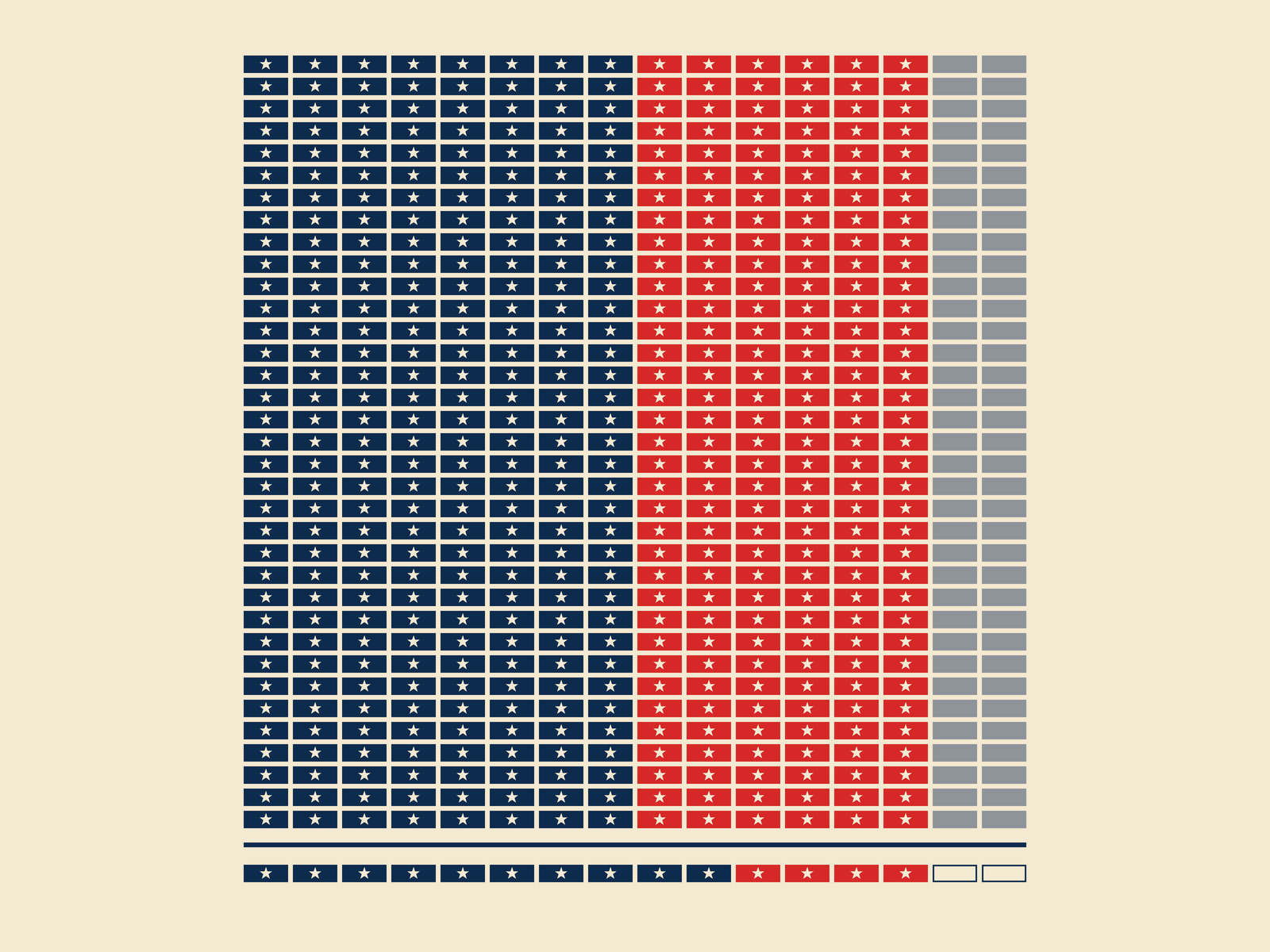
Remember the contingent election rule from the first lesson. The House does not vote member by member. Each casts one vote. In 1800 there were 16 states. To win, a man needed more than half of the 16 delegations. That meant 9. A delegation split evenly between the two men cast no vote at all.
The House met in a crowded room built for the Library of Congress, in the north wing of the new Capitol, the only wing that was finished. The members resolved not to adjourn until they had chosen a president. Every Democratic-Republican backed Jefferson. Most Federalists backed Burr.
The two divided states were Vermont and Maryland. Delaware had only one Representative, James Bayard, a Federalist, and he had cast Delaware's vote for Burr on every one of the 35 ballots. Then came Tuesday, February 17, and the 36th ballot. After political talks, some Federalists chose to abstain: to hold back their votes, here by casting blank ballots. The Federalists from Vermont and Maryland did so. With those votes gone, the Democratic-Republicans in those two delegations carried both states for . Bayard cast a blank ballot, so Delaware voted for no one. So did South Carolina. Jefferson won 10 of the 16 state delegations. Thomas Jefferson was elected president.
The Moderation That Broke the Deadlock
The virtue in this lesson is moderation. Moderation means keeping yourself in balance: not too much, not too little. In a contest, it means knowing how far to push and when to stop.
Look at the Federalists from Vermont, Maryland and Delaware. They did not abandon their party by voting for Jefferson. They also did not keep blocking the vote forever. They chose a path. They cast blank ballots. That one step ended seven days of deadlock.
Aristotle figured this out a long time ago. He taught that a virtue sits in the middle between two faults. One is too little. One is too much. One man never gives an inch. Another gives up everything at the first push. Both have missed the middle.
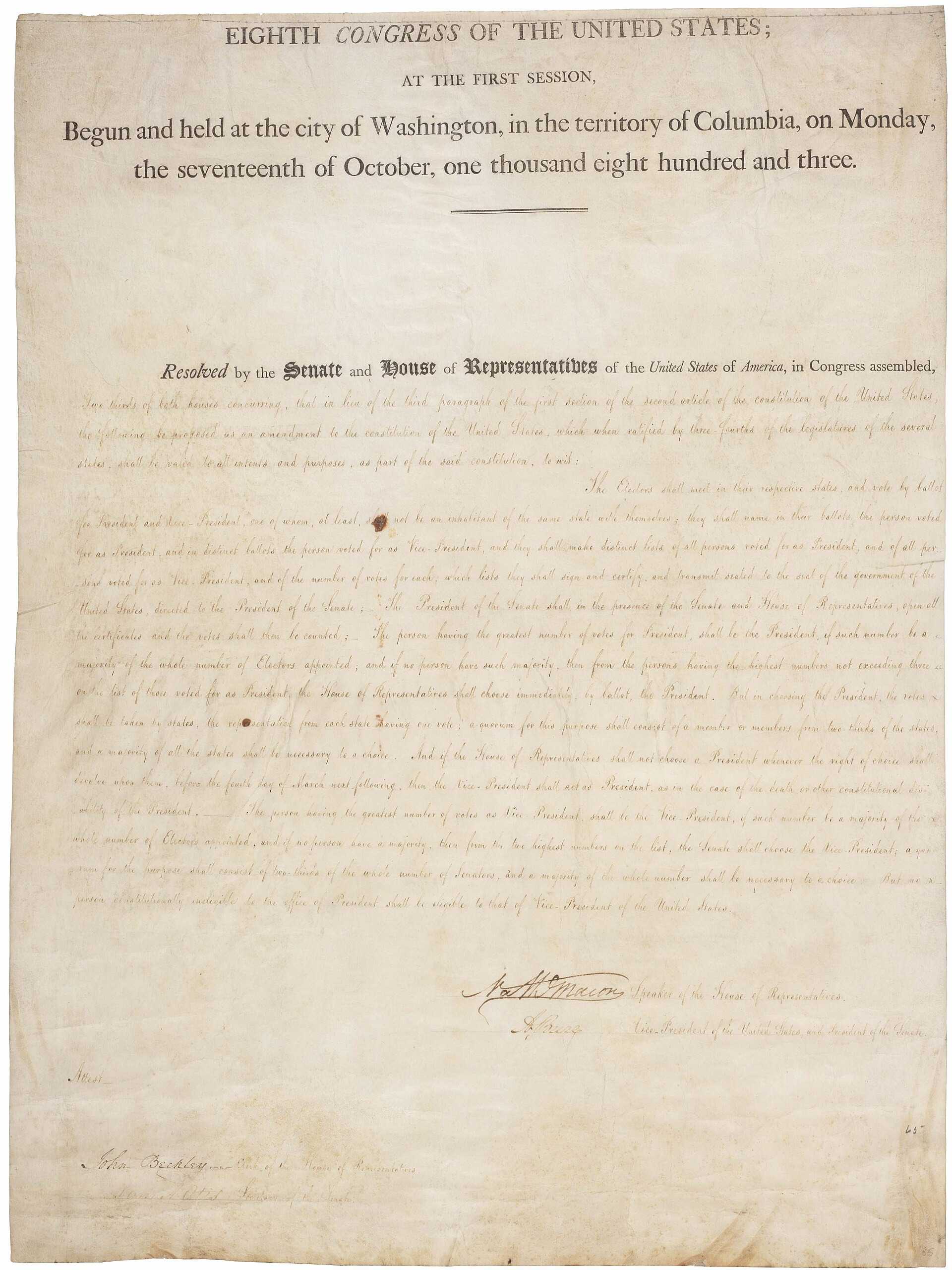
The country also learned from the tie. The rule that worked for Washington had broken. So Congress wrote the Twelfth Amendment. It said that electors must cast separate votes: one marked for president and one marked for vice president. Never again could running mates tie by accident.
Conclusion
Go back to the snow on February 11, 1801, and the sick man on his litter. Thirty-five ballots came out the same. On the thirty-sixth, a handful of Federalists cast blank ballots, and the deadlock broke.
How the map changed. Jefferson's party took the presidency from the Federalists: 73 electoral votes for Jefferson to 65 for Adams. The House chose Jefferson on February 17, 1801, with 10 of 16 state delegations, and Burr became vice president. At noon on Wednesday, March 4, 1801, Jefferson walked from his boardinghouse to the Capitol and took the oath of office in the Senate chamber, the first president sworn in at Washington. Then the Constitution itself changed. The Twelfth Amendment, ratified June 15, 1804, gave every elector one vote for president and one for vice president.
How the republic's character moved. For the first time, a sitting president lost an election, and the office passed from one party to the other. The party that held the House had the power to keep blocking its rivals, and in the end enough of its members stepped back. In his first address as president, Jefferson spoke so quietly that few in the crowded chamber heard him, but the words were soon printed: "We are all Republicans, we are all Federalists." And when the rules failed, the Americans did not throw the rules away. They fixed them by amendment. It was one election in the whole true history of the American vote. In the next lesson, the election of 1824, the House will choose a president again. This time there are four candidates.
To live well is to practice moderation: stand firm without becoming a wall, and know when one step aside lets everyone move forward.
Because elections are won and lost.
Parties rise and fall.
But the republic rests on its citizens.
Lesson Summary
Key Terms
- Federalist Party
- the party of Hamilton and Adams, formed in the early 1790s, favoring a strong central government, commerce, manufacturing, a national bank, and ties with Great Britain.
- Democratic-Republican Party
- the party of Jefferson and Madison, formed in the 1790s, favoring farming interests, a strict reading of the Constitution, and states' rights.
- States' rights
- the powers kept by the states rather than the national government.
- Ticket
- a party's pair of candidates, one meant for president and one meant for vice president.
- Lame duck
- an officeholder whose term is ending because a new one has already been chosen.
- Contingent election
- an election in the House, one vote per state delegation, held when the electors do not settle the choice.
- Abstain
- to hold back your vote; in 1801, by casting a blank ballot.
- Twelfth Amendment
- the 1804 change to the Constitution requiring separate electoral votes for president and vice president.
- Mob
- a crowd stirred up to sudden action, from the Latin mobile vulgus, "the movable crowd."
- Checks and balances
- a design in which each part of a government can stop another part from running away with the whole.
Cause-and-Effect Chart
| Key Fact | The Cause | The Effect |
|---|---|---|
| Jefferson and Burr tied at 73 | Every Democratic-Republican elector voted for both men under the two-vote rule | The choice went to the House |
| The House failed 35 times | Most Federalists backed Burr; Vermont and Maryland were divided | 8 states for Jefferson, 6 for Burr, 2 divided, ballot after ballot |
| Jefferson won on the 36th ballot | Federalists from Vermont, Maryland and Delaware cast blank ballots | Jefferson won 10 of 16 state delegations |
| The Twelfth Amendment was ratified in 1804 | The two-vote rule had produced a tie between running mates | From then on, electors cast separate votes for president and vice president |
Timeline
| Person / Event | Date (AD) | Description |
|---|---|---|
| Federalist and Democratic-Republican parties form | 1790s | Hamilton and Adams lead one party; Jefferson and Madison organize the other in opposition. |
| Adams moves into the President's House | November 1, 1800 | The first president to live in the new house in Washington. |
| The electors vote | December 3, 1800 | Each elector casts two votes; Jefferson and Burr tie at 73; Adams has 65. |
| Congress counts the votes; the House begins balloting | February 11, 1801 | The tie goes to the House, one vote per state, in a snowstorm. |
| The 36th ballot | February 17, 1801 | After 35 failed ballots, Jefferson wins 10 of 16 states. |
| Jefferson's inauguration | March 4, 1801 | Sworn in at noon in the Senate chamber, the first president sworn in at Washington. |
| Congress passes the Twelfth Amendment | December 9, 1803 | The amendment goes to the states for ratification. |
| The Twelfth Amendment is ratified | June 15, 1804 | Electors must cast separate votes for president and vice president. |
COMMAND QUESTIONS
Factual Recall
The "Why" Questions
Write a short paragraph answering each question in your own words, in your notebook. Then check its box: +4 each.
Explain in two or three sentences why the two-vote rule caused Jefferson and Burr to tie, even though their party wanted Jefferson as president.
Why did the blank ballots cast by Federalists from Vermont, Maryland and Delaware end the deadlock when 35 ballots had failed?
Cast Your Ballot
you are an elector of 1800 — cast two votes, both for president, with no vote marked for vice president; most votes = president, second place = vice president; a tie for first goes to the House
Loading…
The ballot: 1800 — President (each elector casts two votes; most votes = president, second place = vice president)
Thomas Jefferson and Aaron Burr — Democratic-Republican — farming country first, a strict reading of the Constitution, states' rights, and less power in the national capital.
John Adams and Charles Cotesworth Pinckney — Federalist — a strong central government, commerce and manufacturing, a national bank, and steady ties with Great Britain.
Also receiving an electoral vote: John Jay (1)
What an elector knew on December 3, 1800:
- Each elector would cast two votes for president, with no vote marked for vice president.
- Each party had named a ticket of two men, one meant for each office.
- Electors in every state were voting the same day in their own states, so no one knew the national count.
- The Federalists held the presidency; John Adams had moved into the new President's House a month before.
What the electors decided: Jefferson 73, Burr 73, Adams 65, Pinckney 64, Jay 1; the House chose Jefferson on the 36th ballot, 10 of 16 states.
Cast your own ballot on MockElection.com — vote as an elector of 1800, with only what an elector of 1800 knew. Then compare your count to history.
Picture yourself in Congress in 1803, after the tie of 1800. Which rule for the electors would you vote for?
Two games wait below
Whistle-Stop
The lesson’s words, against the clock. Twelve in a row earns the Blue Ribbon.
The Canvass
Match each cause to its effect, then each event to its year. Both boards with one miss or fewer earns the Clean Count.
0 of 100 points
Kept in this browser for this visit. Sign in to keep it on any device.