
Lesson 3 — 1824: Four Men, No Majority
The House Chooses a President
Snow is falling on Washington on the morning of February 9, 1825. At noon the Senators file into the hall of the House of Representatives. The electoral votes are counted aloud, the Senators leave, and the House begins to choose a president. One man in the race won more popular votes than anyone else: 153,544. He also won more electoral votes than anyone else: 99. His name is Andrew Jackson. The House votes one time. Jackson wins 7 states. John Quincy Adams wins 13. Adams is the new president. How can the man who led both counts lose? And was the result just, or only lawful? Here is what was at stake. For the first time since 1800, the Constitution's backup plan would choose the president, and a whole party would split over what happened next. At MockElection.com we want to make you a scholar of the republic. Let's see how a free people chose.
One Party, Four Rivals
As you recall from the election of 1800, two parties fought for the presidency: the Federalists and the Democratic-Republicans. By 1824 the Federalist Party was gone. Its last candidate for president, Rufus King of New York, had lost in 1816. Only one national party was left, the Democratic-Republicans.
People called these years the Era of Good Feelings. With one party, you might expect a calm election. It was not. Three of the men who wanted to follow President James Monroe sat in his own cabinet: Secretary of State John Quincy Adams, Secretary of the Treasury William H. Crawford, and Secretary of War John C. Calhoun. Two more stood it: Andrew Jackson, the general who had won the Battle of New Orleans, and Henry Clay, the Speaker of the House. Calhoun stepped back and ran for vice president instead. Four Democratic-Republicans were left, each strong in his own region.
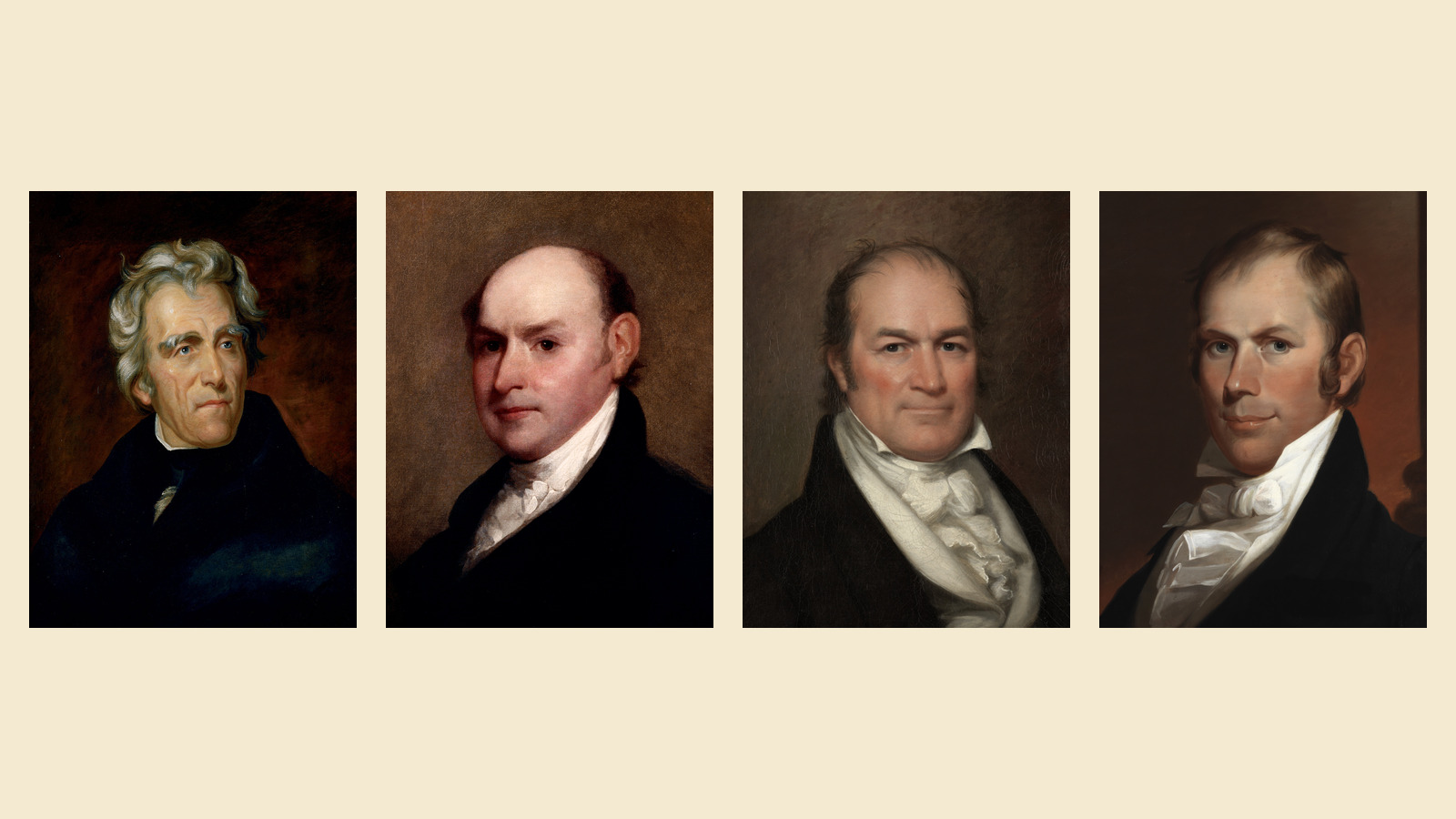
In 1824, 66 members of Congress met in a caucus to name their party's candidate, and the other candidates were named by their own states. Which way would you rather a party choose its candidate?
Short of 131
There were 261 electoral votes in 1824. To win, a candidate needed more than half: 131. Clay had a plan for that. He knew he could not beat Adams in the North or Crawford in the South. He only had to finish third. If no one reached 131, the House would choose from the top three, and Clay led the House. "If I get into the House I consider my election secure," he said in early 1824.
Voting ran state by state from October 26 to December 2, 1824. When the count came in, nobody had 131.
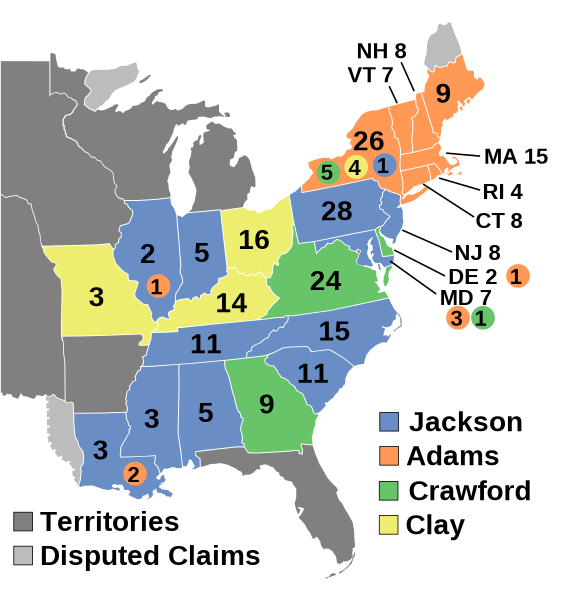
Jackson won a plurality of both counts. A plurality means more votes than anyone else, but not more than half. He led the popular vote with 41.4 percent. He led the electoral vote with 99. But 99 is 32 short of 131. A plurality was not enough.
Two legislatures shaped the final count. In Louisiana, Clay was expected to win, but when the legislature met in December, two of his supporters were absent. Louisiana gave Jackson 3 electors and Adams 2. In New York, the electors chosen by the legislature voted Adams 26, Crawford 5, Clay 4 and Jackson 1. Clay to fourth.

Here's where it tightens. Clay could not win. But he was still Speaker of the House, and the House was about to choose.
The Speaker Chooses
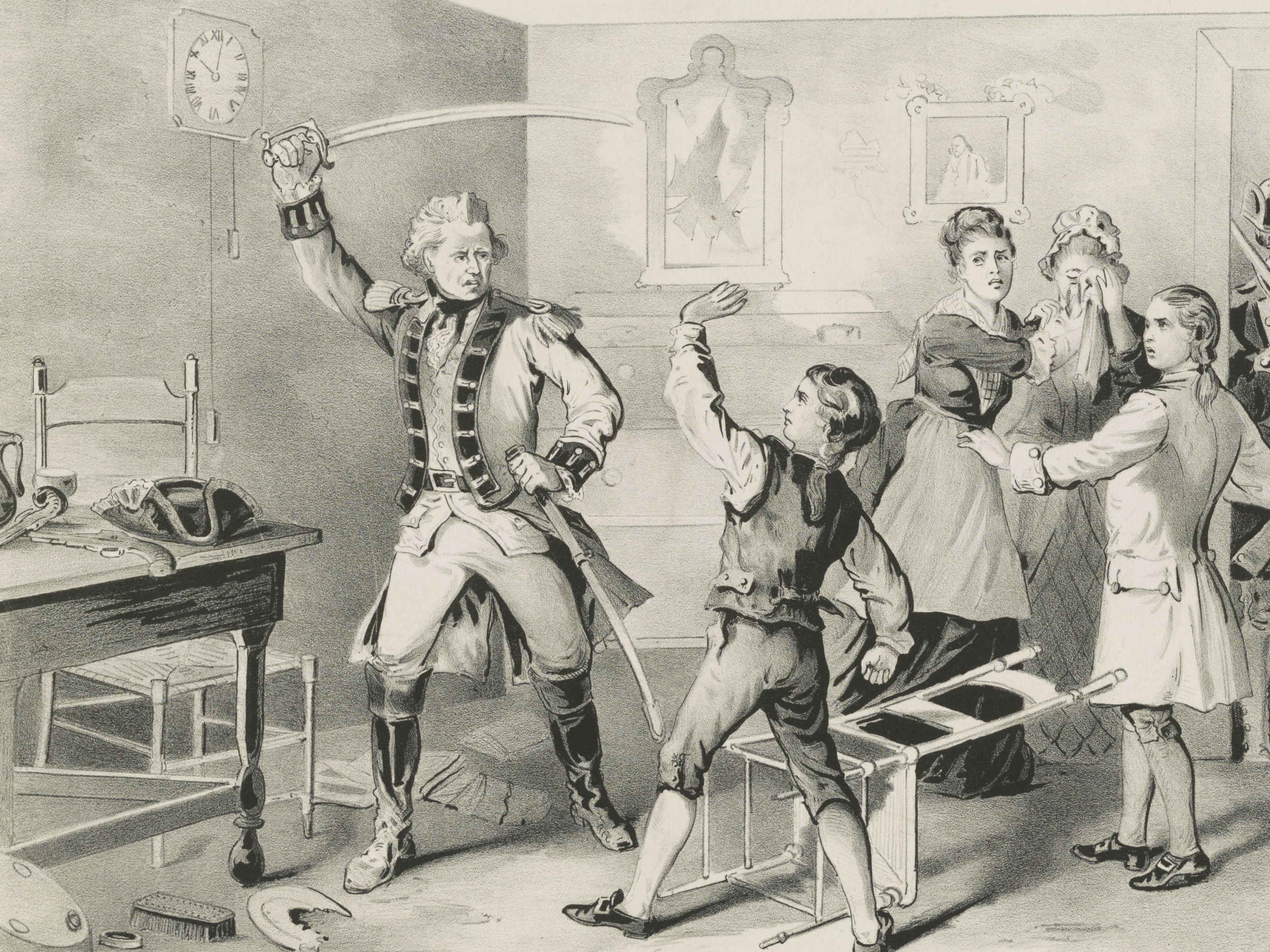
Clay had little confidence in Jackson. He called him a "military chieftain," and he did not believe that "killing 2,500 Englishmen at New Orleans" fitted a man for the duties of the chief magistrate. Adams and Clay had disagreed before, but their plans for the country's economy ran . On January 8, 1825, Clay told friends his decision. The next day he met Adams for three hours.
On January 24, Kentucky's members of the House announced for Adams. Kentucky's legislature had instructed them to vote for , and Adams had not won a single popular vote in Kentucky. Ohio's members, from another Clay state, backed Adams too.
In late January a letter from an unnamed congressman appeared in Philadelphia's Columbian Observer. It claimed that Adams's friends had offered Clay the office of Secretary of State in return for his support. It compared the deal to "the famous Burr conspiracy of 1801," the House contest you met in the last lesson.
February 9, 1825
In 1824 there were 24 states. In a contingent election each state delegation casts one vote, so a candidate needed 13. By the morning of February 9, Adams could count on 12. The thirteenth was New York. New York's 34 members stood 17 for Adams and 17 against.
One of the 17 against was Stephen Van Rensselaer of Albany: elderly, wealthy, pious, a major general of volunteers in the War of 1812, and a Crawford man who had given his word that he would not vote for Adams. That cold morning he walked through the snow to the Capitol. Clay and Daniel Webster met him there, took him into the Speaker's room, and spent hours arguing that Crawford could not win and that the safety of the Union rested on Adams.

At noon the Senators walked into the House, the electoral votes were counted, and the Senators left. Then the ballot boxes went around the chamber.
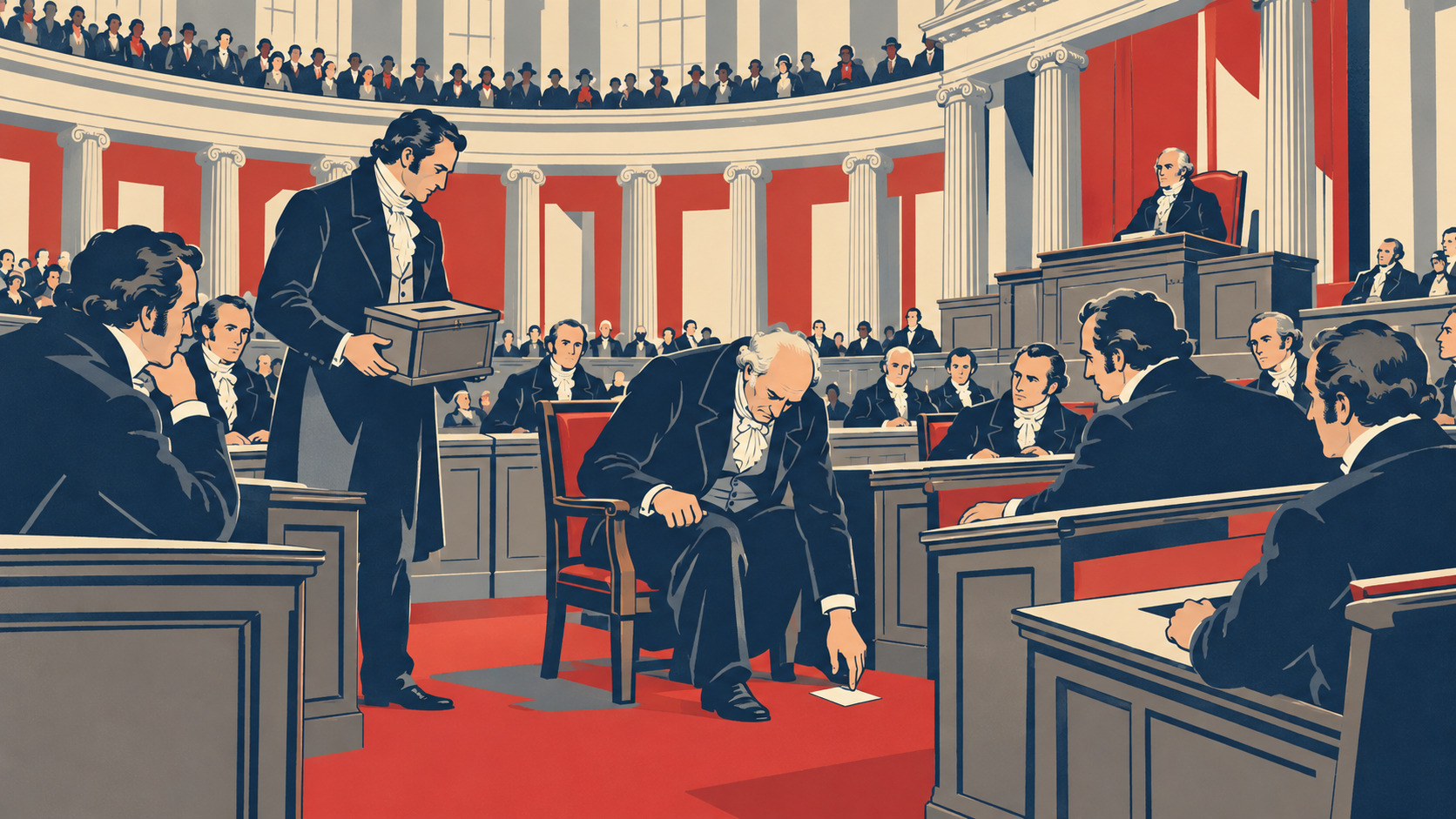
Many had expected a long contest like the thirty-five ballots of 1801. It took one. Applause broke from the galleries, followed by some hissing. Adams, told the news, said, "May the blessing of God rest upon the event of this day." That evening, at President Monroe's last reception at the White House, Jackson walked up to Adams and offered his hand.
Within a week Adams made a choice of his own. He asked Henry Clay to be his Secretary of State, an office whose holders had often gone on to the presidency. Clay accepted on February 17. Adams was sworn in on March 4, 1825, and he appointed Clay on March 7.
The Justice of a Lawful Result
The virtue in this lesson is justice. The Roman lawyer Ulpian put it in one line: justice is the constant and perpetual will to give each his due. In an election, that raises a hard question. What was each one due: the voters, the states, the candidates, the Constitution?
Adams and Clay held to the Constitution's rule. The House chooses, one vote per state, from the top three, and the House had chosen. Jackson's men held to what the voters and the electors had said. Each side was pointing at something real.
Jackson applied justice in the way he lost. He shook Adams's hand on the night of the vote. In October 1825 he resigned his Senate seat, and the Tennessee legislature nominated him for president again. He took his case back to the voters, not against the rules.
The split did not heal. It made a new two-party system.

Conclusion
Go back to February 9, 1825: the snow, the noon count, the ballot on the floor. The man with 99 electoral votes and 153,544 popular votes lost. The man with 84 electoral votes and 108,740 popular votes won. Thirteen states made the choice.
How the map changed. The Electoral College gave no one a majority: 99, 84, 41 and 37, with 131 needed. The House chose Adams on its first ballot with 13 of 24 states. It is the only election in which the man with the most electoral votes did not become president. It is also the first of five in which the leader of the national popular vote did not win, though in 1824 six states held no popular vote at all. The single party of the Era of Good Feelings broke apart, and in its place came the Democrats and, by 1834, the Whigs.
How the republic's character moved. The Americans of 1825 learned that a lawful result and a just result could look different from different seats. They argued over it in public, and they turned the argument into new parties instead of tearing up the rules. It was one election in the whole true history of the American vote. In a later lesson, the election of 1860, the parties would break apart again, and that time much more would break with them.
To live well is to practice justice: to give each person his due, and to keep asking whether the rules you follow are doing that.
Because elections are won and lost.
Parties rise and fall.
But the republic rests on its citizens.
Lesson Summary
Key Terms
- Plurality
- more votes than any other candidate, but not more than half.
- Majority
- more than half of all votes.
- Contingent election
- an election in the House, one vote per state, held when no one wins a majority of electors; after 1804, the House chooses from the top three.
- Unit vote
- a count by groups, where each group casts one vote however many members it holds, as Rome's tribes and centuries did and as the House did in 1825.
- Caucus
- a closed meeting of a party's members to choose its candidate, as the party's members of Congress did in February 1824.
- Era of Good Feelings
- the years when the Democratic-Republicans were the only national party.
- Corrupt Bargain
- the name Jackson's supporters gave to Clay's support for Adams and Adams's appointment of Clay as Secretary of State.
- Popular sovereignty
- the rule of the people; a Democratic Party principle.
- Protective tariff
- a tax on goods from other countries meant to protect a nation's own makers.
- Whig Party
- the party of Clay and Webster, named in 1834 for the British Whigs who opposed absolute kings.
Cause-and-Effect Chart
| Key Fact | The Cause | The Effect |
|---|---|---|
| No candidate reached 131 electoral votes | Four candidates from one party split the vote by region | The election went to the House |
| Clay was cut from the House vote | The Twelfth Amendment's top three rule counts electoral votes | Crawford stayed in with 41; Clay was out with 37 |
| Adams won 13 of 24 states | Clay backed Adams, and Van Rensselaer's ballot gave Adams New York | Adams became president on the first ballot |
| Jackson's supporters cried "Corrupt Bargain" | Adams named Clay Secretary of State | The Democratic-Republican Party split, and the Democrats and later the Whigs formed |
Timeline
| Person / Event | Date (AD) | Description |
|---|---|---|
| Congressional caucus | February 1824 | 66 of 261 members of Congress attend; Crawford wins 64 votes. |
| The popular vote | October 26 – December 2, 1824 | 18 states vote for electors; 6 legislatures choose them. Jackson 99, Adams 84, Crawford 41, Clay 37; 131 needed. |
| Electoral count and House contingent election | February 9, 1825 | Congress counts the electoral votes at noon; the House elects Adams with 13 of 24 states on the first ballot. |
| Adams's inauguration | March 4, 1825 | John Quincy Adams is sworn in as president. |
| Clay appointed | March 7, 1825 | Adams appoints Henry Clay Secretary of State. |
| Jackson leaves the Senate | October 1825 | Jackson resigns his seat; the Tennessee legislature nominates him for president again. |
| The Democrats organize | 1828 | Jackson runs under the new Democratic banner. |
| The Whigs take their name | 1834 | The National Republicans and other opponents of Jackson become the Whig Party. |
COMMAND QUESTIONS
Factual Recall
The "Why" Questions
Write a short paragraph answering each question in your own words, in your notebook. Then check its box: +4 each.
Explain in two or three sentences how Jackson could lead both the popular vote and the electoral vote and still lose the presidency.
Why did the events of 1824 and 1825 lead to the creation of two new parties?
Cast Your Ballot
you are a citizen of 1824 in a state where the voters choose the electors — cast one vote for one candidate's electors; if no one wins 131 of 261 electoral votes, the House chooses from the top three, one vote per state
Loading…
The ballot: 1824 — President (one party, four candidates; one vote for one candidate's electors)
Andrew Jackson — Democratic-Republican, Tennessee — the general of New Orleans; for a "judicious" tariff, against a national bank, and against most federal roads and canals
John Quincy Adams — Democratic-Republican, Massachusetts; Secretary of State — the seasoned statesman of Ghent and Florida; for a tariff, a national bank, and federal roads and canals
William H. Crawford — Democratic-Republican, Georgia; Secretary of the Treasury; the caucus nominee — heir to the Virginia presidents; for a small federal government and free trade
Henry Clay — Democratic-Republican, Kentucky; Speaker of the House — for the American System: a protective tariff, a national bank, and federal roads and canals
What a voter knew on October 26, 1824:
- The Federalist Party was gone; all four candidates came from the same party.
- Crawford had been named by a caucus of 66 of the 261 members of Congress; the others had been named by their states.
- Each candidate had strong support in his own region.
- If no one won 131 electors, the House would choose from the top three, and Henry Clay was Speaker of the House.
What the voters decided: Jackson 99, Adams 84, Crawford 41, Clay 37 (131 needed); the House chose Adams, 13 states to Jackson's 7 and Crawford's 4.
Cast your own ballot on MockElection.com — vote as a citizen of 1824, with only what a citizen of 1824 knew. Then compare your count to history.
Picture yourself in the House on February 9, 1825, holding your state's vote. Your legislature at home favors one man; your own judgment favors another. How do you vote?
Two games wait below
Whistle-Stop
The lesson’s words, against the clock. Twelve in a row earns the Blue Ribbon.
The Canvass
Match each cause to its effect, then each event to its year. Both boards with one miss or fewer earns the Clean Count.
0 of 100 points
Kept in this browser for this visit. Sign in to keep it on any device.