
Lesson 4 — 1860: Four Tickets and a Breaking Union
Torches, Tickets, and a Telegraph
Watch first
Why Four Candidates Ran in the 1860 Presidential Election
How Lincoln Won the 1860 Election With 39.7% of the Vote
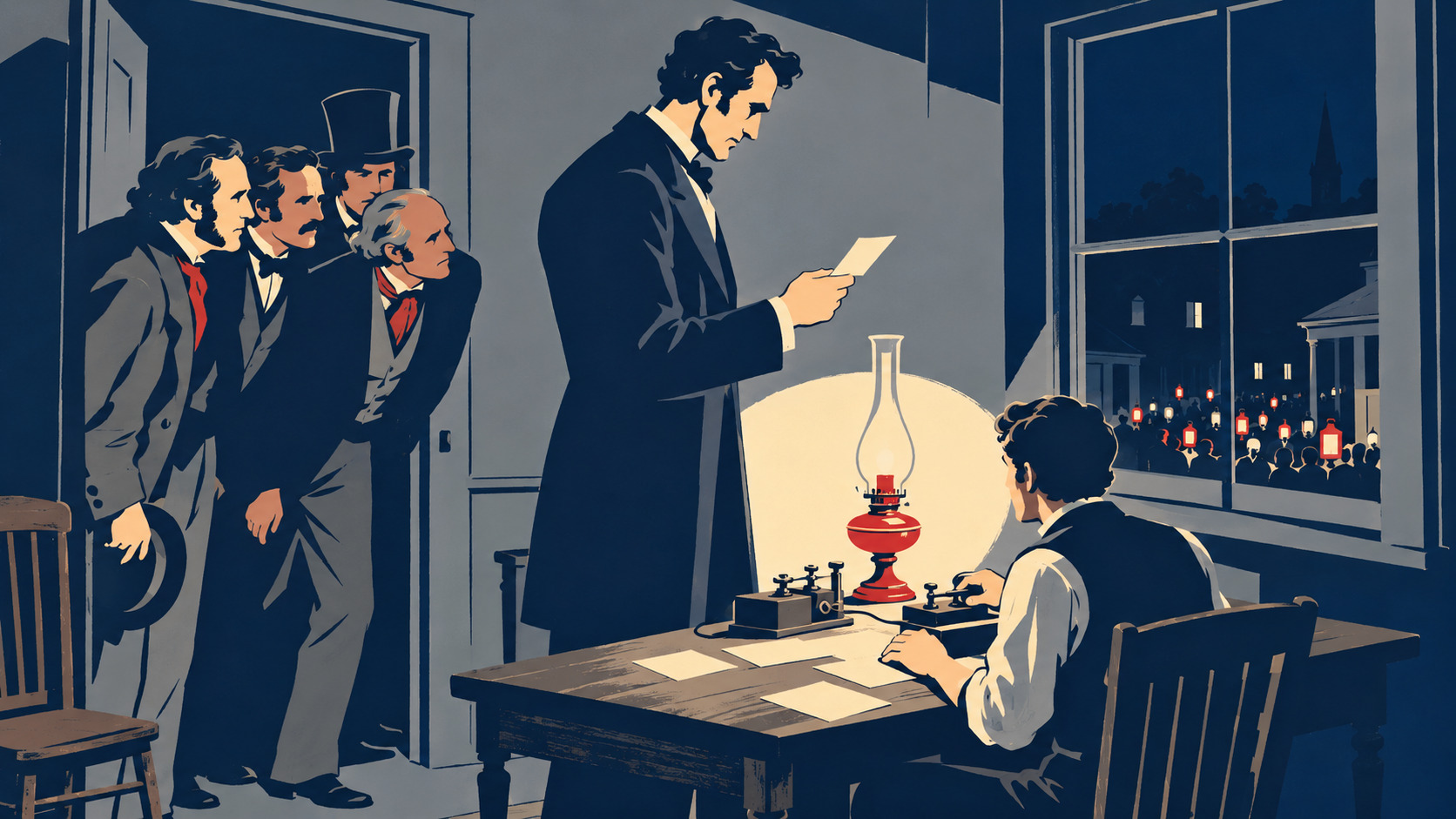
A cannon salvo greeted the sunrise over Springfield, Illinois, on November 6, 1860. By night, a tall, lean man was waiting on the second floor of the Illinois & Mississippi Telegraph Company. That afternoon he had walked to the courthouse to vote, and before he handed in his ticket he cut his own name off it. Now he waited on New York and its 35 electoral votes. Shortly before two o'clock in the morning, the dispatch came: New York was his. He thanked the operators and stuffed the last slip of paper into his pocket. His name was Abraham Lincoln. He had won 1,855,276 votes — 39.7 percent, than four voters in ten. In ten Southern states his name was not even on the ballot. Yet he held 180 electoral votes, 28 more than the 152 he needed. How can a man win the presidency when six voters in ten chose someone else? And what happens to a republic when its parties break along the lines of its regions? Here is what was at stake. Before Lincoln could take the oath on March 4, 1861, seven Southern states voted to leave the Union. One count would decide who led 33 states, and whether they would stay one country. At MockElection.com we want to make you a scholar of the republic. Let's see how a free people chose.
The Question That Broke the Parties
As you recall from the election of 1824, one party split into two: the Democrats and the Whigs. By 1860 the parties had broken again, and this time the break ran along one question.
That question was slavery in the West. The United States held lands in the West called territories. A territory is land that belongs to the country but is not yet a state. Should slavery be allowed to spread into those territories? Americans could not agree, and the argument split the national parties apart.
The Democrats met first. On April 23, 1860, their national convention opened in Institute Hall in Charleston, South Carolina. The galleries were packed with spectators who wanted slavery protected in the territories. Southern delegates asked for a platform — a party's written statement of what it stands for — that promised that protection. The men backing Senator Stephen A. Douglas of Illinois wrote a different one. On April 30 the convention chose the platform, 165 votes to 138. The Alabama delegates rose first. Fifty Southern delegates walked out of the hall.
Here's where it tightens. Since its first convention in 1832, the party had kept a two-thirds rule: a man needed two-thirds of the votes to be nominated. The chair ruled that this meant two-thirds of the whole convention, not two-thirds of the men still in the room. Douglas led on the first ballot with 145½ votes. He led on every ballot after that. The delegates voted 57 times over two days, and Douglas never rose above 152½. On May 3 the convention adjourned without a candidate.
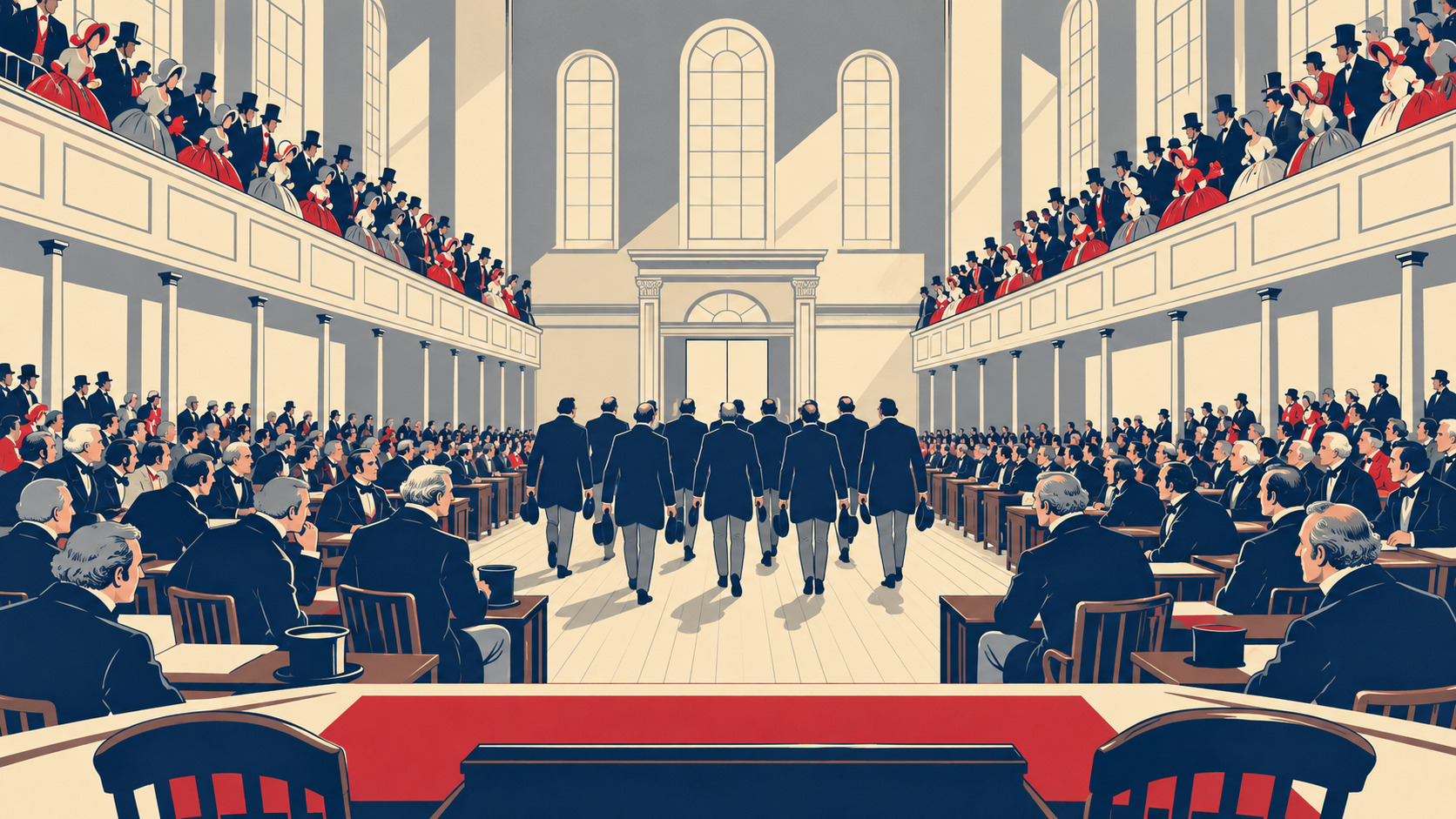
The party met again in Baltimore on June 18. Southern delegates walked out a second time. The men who stayed nominated Douglas, with Herschel V. Johnson, a former governor of Georgia, as his running mate. The Southern Democrats named their own ticket: Vice President John C. Breckinridge of Kentucky, with Senator Joseph Lane of Oregon. Meanwhile, on May 9, the new Constitutional Union Party had named John Bell of Tennessee, with Edward Everett, a former president of Harvard. In mid-May the Republicans met in Chicago and chose Abraham Lincoln on the third ballot, with Senator Hannibal Hamlin of Maine. One party now had two tickets, and the country had four.
The Democrats said a nominee needed two-thirds of the whole convention. Which rule would you keep for choosing a party's candidate?
Four Tickets
The Republican Party was founded in 1854 by anti-slavery Whigs, Free Soilers, and Northern Democrats who opposed the Kansas-Nebraska Act. It wanted to stop slavery from spreading into the federal territories. It also wanted protective tariffs, a railroad across the continent, and free land for homesteaders.
The Northern Democratic Party stood for popular sovereignty: the voters in each territory should decide for themselves whether to allow slavery there.
The Southern Democratic Party demanded that the Constitution protect the right to hold slaves as property in every federal territory. The property they meant was enslaved human beings.
The Constitutional Union Party was formed mostly by former Whigs and moderates from the border states. Its goal was to keep the country from breaking apart, and it chose not to take a detailed stand on slavery at all.
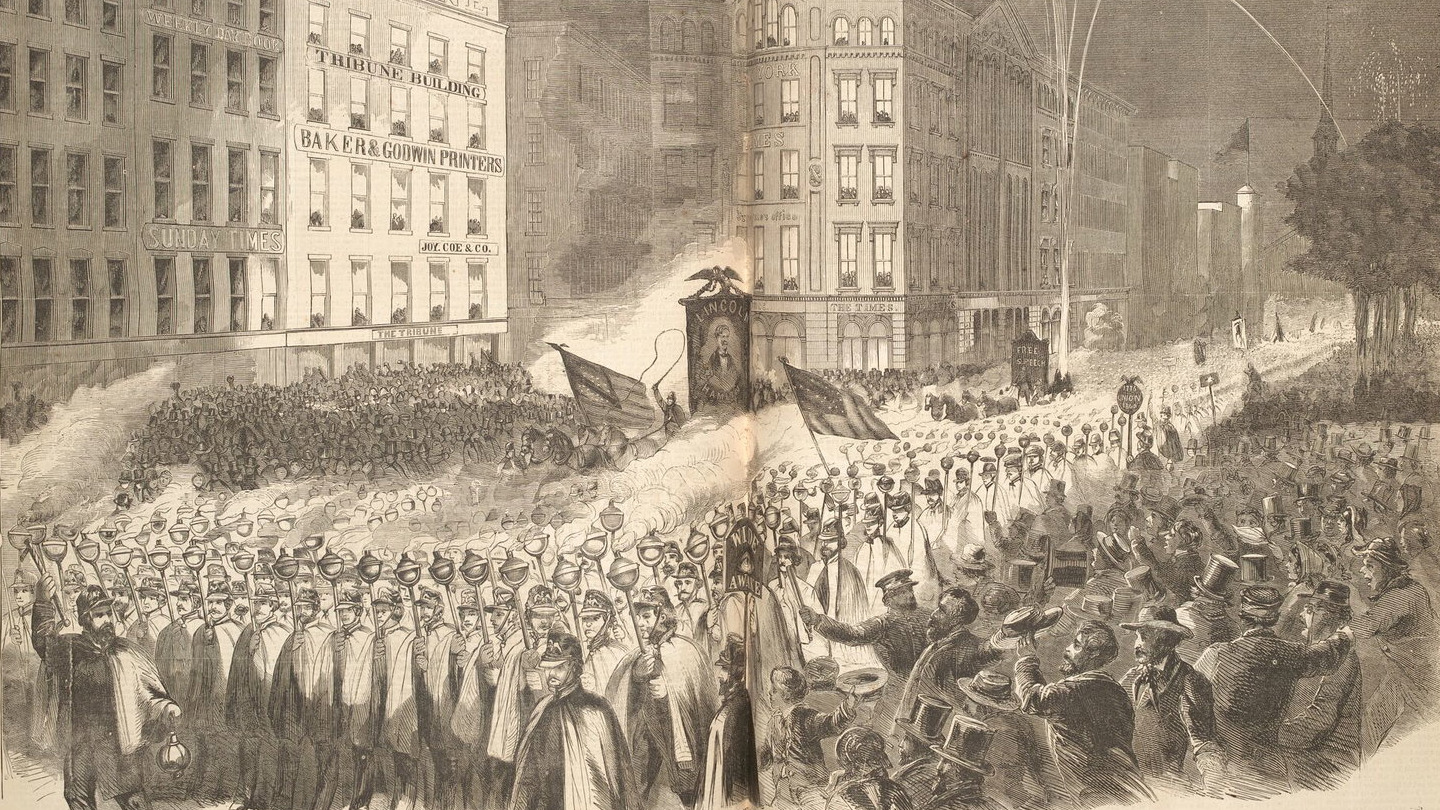
Custom kept a candidate for president at home. Lincoln stayed in Springfield, but Douglas traveled the country to speak for himself. The marching was left to supporters. On March 3, 1860, young Republicans in Hartford, Connecticut, formed a club called the Wide Awakes. They wore capes of black oilcloth to keep the oil of their torches from dripping on their clothes. Marching clubs of every party soon wore uniforms and hired bands. On the evening of October 3, 1860, some ten thousand uniformed Wide Awakes carried torches through New York City in a Grand Procession. Many in the South read the torchlit columns as a threat.
180 Electors from 39.7 Percent
Election Day, November 6, 1860, dawned sunny but cold in Springfield. Across the country, 81.8 percent of eligible voters went to the polls.
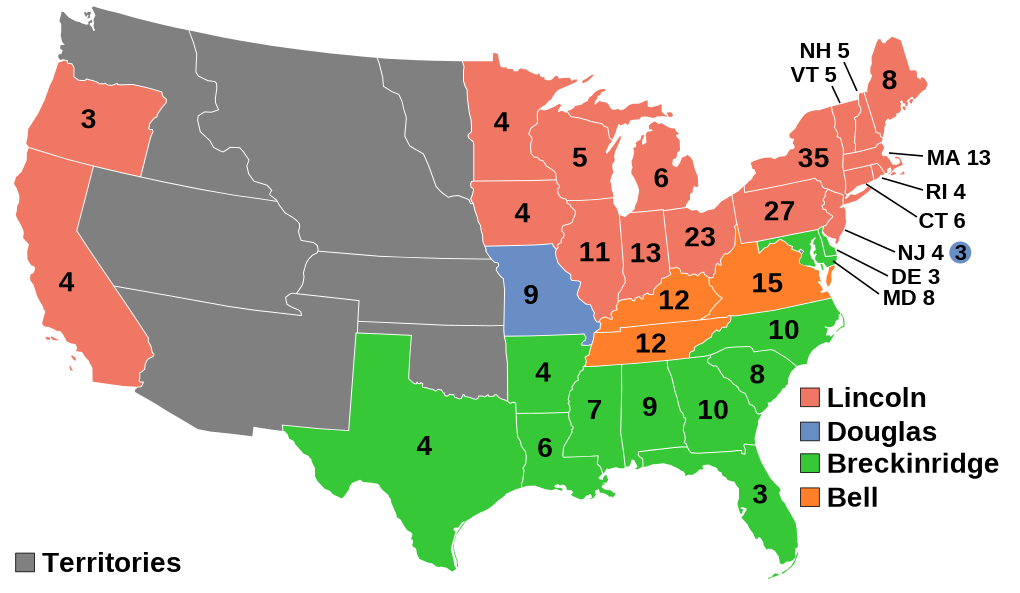
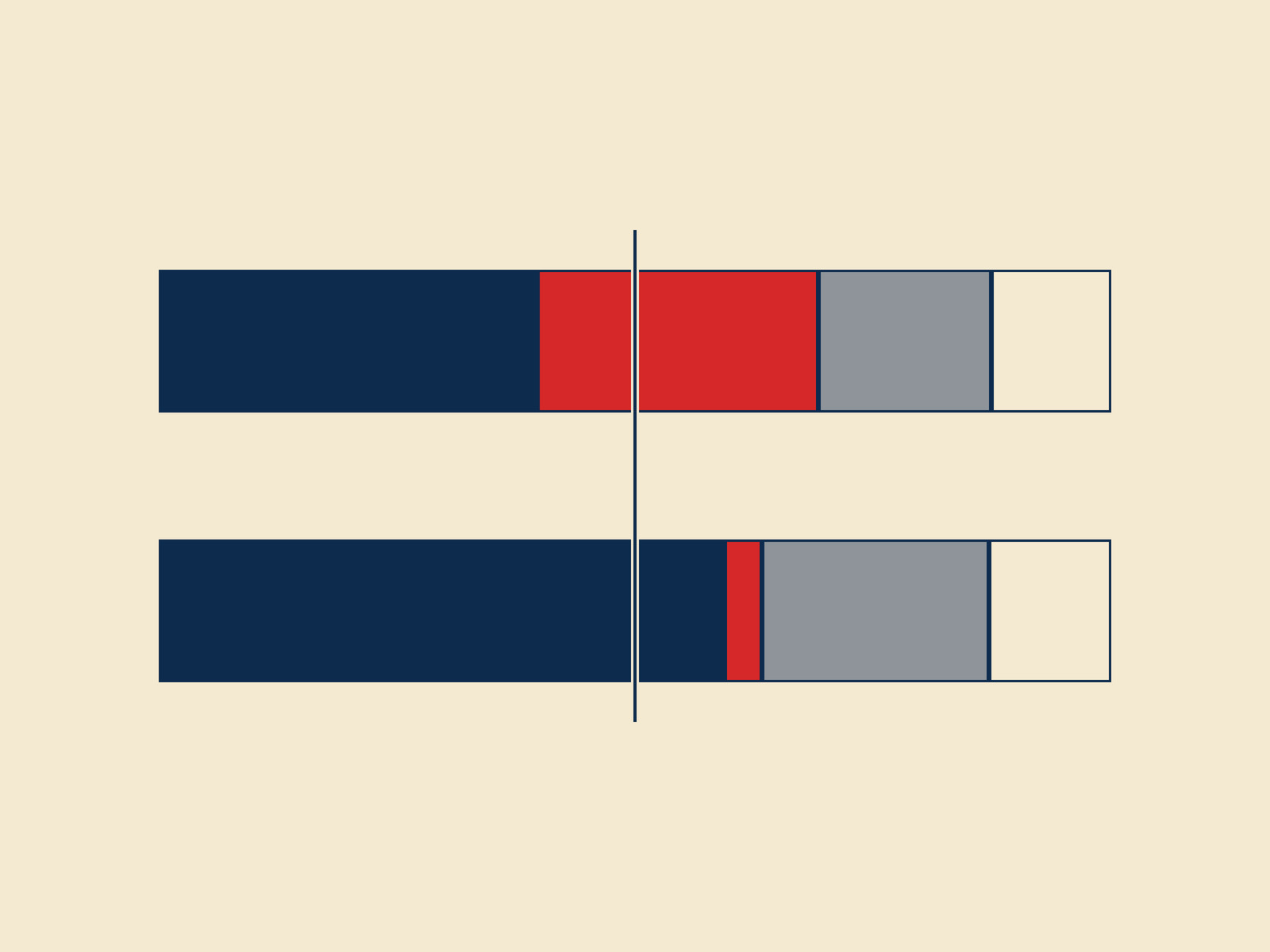
Lincoln needed 152 electoral votes. He had 180, which is 28 more than he needed. Now add up everyone else: 72 + 39 + 12 = 123. Even if every elector who did not vote for Lincoln had joined together, they would still have been 29 short of 152. Lincoln won a plurality — more votes than any other candidate, but less than half of all the votes cast.
How did that happen with under 40 percent of the vote? The answer is in the rules. Lincoln's voters lived mostly in the free states of the North, which had large populations. He won electors in all 18 free states, and every elector in each of them except New Jersey, which split its 7 electors: 4 for Lincoln, 3 for Douglas. His 1,381,944 votes were across the whole country, but he won few single states. He carried only Missouri, with 9 electors, and added the 3 from New Jersey. That gave him 12.
The Courage of a Hard Count
The virtue in this lesson is courage. Courage is not the same as having no fear. It is doing your duty even when you are of what will happen next.
In October 1860, state elections in the North showed that Lincoln would win. Douglas read the returns and made a choice. He spent the last weeks of his own campaign in the slave states, telling Southern crowds that no state should leave the Union over the result. After the vote, he urged the South to accept it.
South Carolina did not wait for the new president. On December 20, 1860, a convention in Charleston voted unanimously to pass an ordinance of secession — a state's official vote to leave the United States. Four days later it published its reasons.
By February 1, 1861, six more states had followed: Mississippi, Florida, Alabama, Georgia, Louisiana, and Texas.
Then came February 13, 1861. Congress met in the House chamber to count the electoral votes. The man presiding was the Vice President, John C. Breckinridge, the candidate who had come in second in electors. Seven states had already voted to leave. Breckinridge held to the duty of his office. When the count was done, he announced his own : "Abraham Lincoln, of Illinois, having received a majority of the whole number of electoral votes, is elected President."
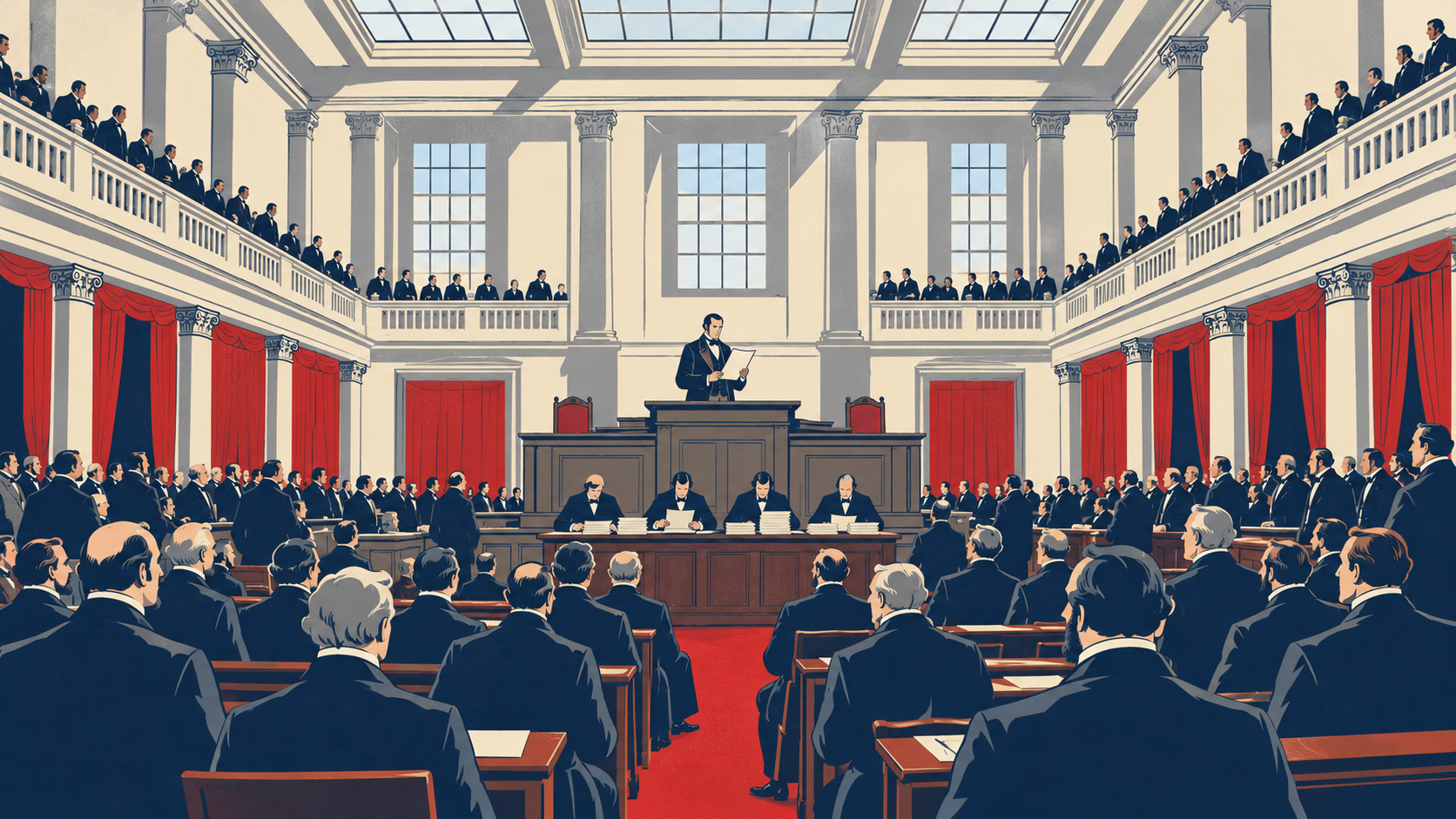
Aristotle figured this out a long time ago. In his Ethics, he taught that courage is the middle place between two faults. On one side is cowardice, the fear that runs from what must be faced. On the other side is rashness, the boldness that charges ahead without thinking. Douglas and Breckinridge had both lost. Each one applied courage at the same hard place: where the result of a count had to be said aloud to people who did not want to hear it.
Conclusion
Go back to that small office in Springfield and the slip of paper in Lincoln's pocket: 1,855,276 votes, 39.7 percent, 180 electors. Lincoln won the presidency without winning most of the voters, and without his name on the ballot in ten states.
How the map changed. The electoral map split by region. Lincoln carried 18 states, Breckinridge 11, Bell 3, and Douglas 1. The four-way split gave the presidency to the Republicans, a party only six years old. Before Lincoln took the oath on March 4, 1861, seven states had voted to leave the Union. On April 12, 1861, Confederate forces fired on Fort Sumter, and the Civil War began.
How the republic's character moved. In 1860, 81.8 percent of eligible voters went to the polls, and marching clubs with torches filled the streets. These were a people who took their vote seriously. The election also showed how winner take all works. It rewards a party whose voters are gathered together, and it hurts a party whose voters are spread thin. And it showed the limit of any election. A count can choose a president. It cannot by itself make every state accept the choice. In a later lesson, the election of 1876, the count is so close and so disputed that Congress has to invent a new way to settle it. Each lesson teaches one election in the whole true history of the American vote.
To live well is to practice courage: say the hard thing aloud when the count is in, and still think before you charge.
Because elections are won and lost.
Parties rise and fall.
But the republic rests on its citizens.
Lesson Summary
Key Terms
- Territory
- land that belongs to the United States but is not yet a state.
- Platform
- a party's written statement of what it stands for.
- Two-thirds rule
- the Democratic convention rule that a nominee needed two-thirds of the votes; in Charleston, two-thirds of the whole convention.
- Popular sovereignty
- in 1860, the idea that the voters of each territory should decide whether to allow slavery there.
- Party ticket
- a slip printed by a party, listing its candidates, that a voter carried to the voting table.
- Winner take all
- the rule under which the ticket with the most votes in a state wins all of its electors.
- Plurality
- more votes than any other candidate, but less than half of all the votes cast.
- Unit rule
- the rule that a group's whole vote goes the way most of its members vote, as in Rome's centuries.
- Ordinance of secession
- a state's official vote to leave the United States.
- Courage
- doing your duty even when you are afraid of what will happen next; the mean between cowardice and rashness.
Cause-and-Effect Chart
| Key Fact | The Cause | The Effect |
|---|---|---|
| Fifty Southern delegates walked out at Charleston | The convention chose the Northern platform, 165 to 138 | The Democrats split and ran two tickets |
| Lincoln won 180 electors with 39.7 percent | His voters were gathered in the free states, under winner take all | He won the presidency with 28 more than the 152 needed |
| Douglas won only 12 electors | His 1,381,944 votes were spread thin, with few single states won | He was second in the popular vote but last in electors |
| South Carolina seceded on December 20, 1860 | Its convention judged the president-elect hostile to slavery | Six more states followed by February 1, 1861 |
Timeline
| Person / Event | Date (AD) | Description |
|---|---|---|
| Republican Party founded | 1854 | Formed by anti-slavery Whigs, Free Soilers, and Northern Democrats against the Kansas-Nebraska Act. |
| Southern delegates walk out | April 30, 1860 | Fifty Southern delegates leave the Democratic National Convention in Charleston. |
| Election of 1860 | November 6, 1860 | Lincoln 180, Breckinridge 72, Bell 39, Douglas 12; 152 needed. |
| South Carolina secedes | December 20, 1860 | A Charleston convention votes unanimously to leave the Union. |
| Texas secedes | February 1, 1861 | The seventh state to leave before the inauguration. |
| Congress counts the electoral votes | February 13, 1861 | Vice President Breckinridge announces Lincoln's election. |
| Lincoln's inauguration | March 4, 1861 | Lincoln takes the oath of office. |
| Fort Sumter | April 12, 1861 | Confederate forces fire on the fort, and the Civil War begins. |
COMMAND QUESTIONS
Factual Recall
The "Why" Questions
Write a short paragraph answering each question in your own words, in your notebook. Then check its box: +4 each.
Explain in two or three sentences how Lincoln could win the Electoral College with less than 40 percent of the popular vote.
Douglas led on all 57 ballots at Charleston. Explain in two or three sentences why he still was not nominated there.
Cast Your Ballot
one party ticket per voter; in your state the ticket with the most votes takes every elector (winner take all); 152 of 303 electoral votes wins
Loading…
The ballot: 1860 — President of the United States
Abraham Lincoln and Hannibal Hamlin — Republican — keep slavery out of the federal territories; protective tariffs; a railroad across the continent; free land for homesteaders.
Stephen A. Douglas and Herschel V. Johnson — Northern Democratic — popular sovereignty: let the voters of each territory decide about slavery for themselves.
John C. Breckinridge and Joseph Lane — Southern Democratic — the Constitution's protection for slaveholders' property in every federal territory.
John Bell and Edward Everett — Constitutional Union — "the Constitution of the Country, the Union of the States, and the Enforcement of the Laws."
What a voter knew on November 6, 1860:
- The Democrats had split at Charleston and Baltimore and were running two tickets.
- Lincoln's name would not appear on the ballot in ten Southern states.
- Southern leaders had warned that states would leave the Union if Lincoln won.
- 152 electoral votes were needed to win.
What the voters decided: Lincoln 180 (39.7 percent), Breckinridge 72 (18.1 percent), Bell 39 (12.6 percent), Douglas 12 (29.5 percent, second in the popular vote).
Cast your own ballot on MockElection.com — vote as a citizen of 1860, carrying one party ticket to the voting table, with only what a citizen of 1860 knew. Then compare your count to history.
Picture yourself in the winter of 1860, between the vote and the inauguration. Which virtue did the country's leaders need most?
Two games wait below
Whistle-Stop
The lesson’s words, against the clock. Twelve in a row earns the Blue Ribbon.
The Canvass
Match each cause to its effect, then each event to its year. Both boards with one miss or fewer earns the Clean Count.
0 of 100 points
Kept in this browser for this visit. Sign in to keep it on any device.