
Lesson 8 — 1984: Forty-Nine States and One
Electors, a Landslide, and a Phone Call
Picture yourself in St. Paul, Minnesota, on the night of November 6, 1984. Walter Mondale has just picked up a telephone and called the President of the United States to . Of fifty states, only one has chosen Mondale: his own. Even there, the count stands at 1,036,364 for Mondale and 1,032,603 for Ronald Reagan. That is a lead of 3,761 votes out of 2,084,449 cast, or about one vote in every 554. Now look at the whole country. Reagan won 58.8 percent of the popular vote, the votes cast by the people themselves. That is about six voters in every ten. Yet he won 525 of the 538 electors, or 97.6 percent. A win this wide is called a landslide. How can six voters in ten become almost every elector in the nation? Here is what was at stake. A sitting president was asking for four more years after a hard recession. A former vice president was asking the country to change course and cut its debt. The answer would come through the machine the Founding Fathers built in Article II, one state at a time. At MockElection.com we want to make you a scholar of the republic. Let's see how a free people chose.
Two Tickets, Three Debates
Ronald Reagan had won the presidency in 1980 with 489 electoral votes. His first years were hard ones. A recession struck in 1981 and 1982, and unemployment reached 10.6 percent in December 1982. By January 1983, only 35 percent of Americans approved of his work, and polls showed him losing to Walter Mondale. Then the economy . By March 1984, unemployment had fallen to 7.7 percent. Reagan announced on January 29, 1984, that he would run again. His campaign spoke of a recovery and a country that had found its confidence again.
Mondale had announced his own run on February 21, 1983, and won a long primary contest against several rivals. At the Democratic convention in San Francisco, July 16 to 19, 1984, he won the nomination with 2,191 delegate votes. He chose Representative Geraldine Ferraro of New York as his running mate, the candidate for vice president who runs beside him. A candidate and a running mate together make a ticket. Ferraro was the first woman ever placed on a major party's ticket. In August the Republicans named Reagan and Vice President George Bush again, with 2,233 delegate votes for Reagan.
On July 19, Mondale accepted the nomination. He promised to cut the federal budget deficit by two-thirds by the end of his first term. Then he said something few candidates say out loud: "Let's tell the truth. Mr. Reagan will raise taxes, and so will I. He won't tell you. I just did."
Three debates followed. On October 7, in Louisville, Kentucky, 65.1 million people watched Reagan and Mondale. Reagan, 73, had a rough night, and many asked whether a man his age could serve four more years. On October 11, 56.7 million watched Bush and Ferraro debate in Philadelphia. On October 21, in Kansas City, Missouri, 67.3 million watched as the journalist Henry Trewhitt asked Reagan about his age.
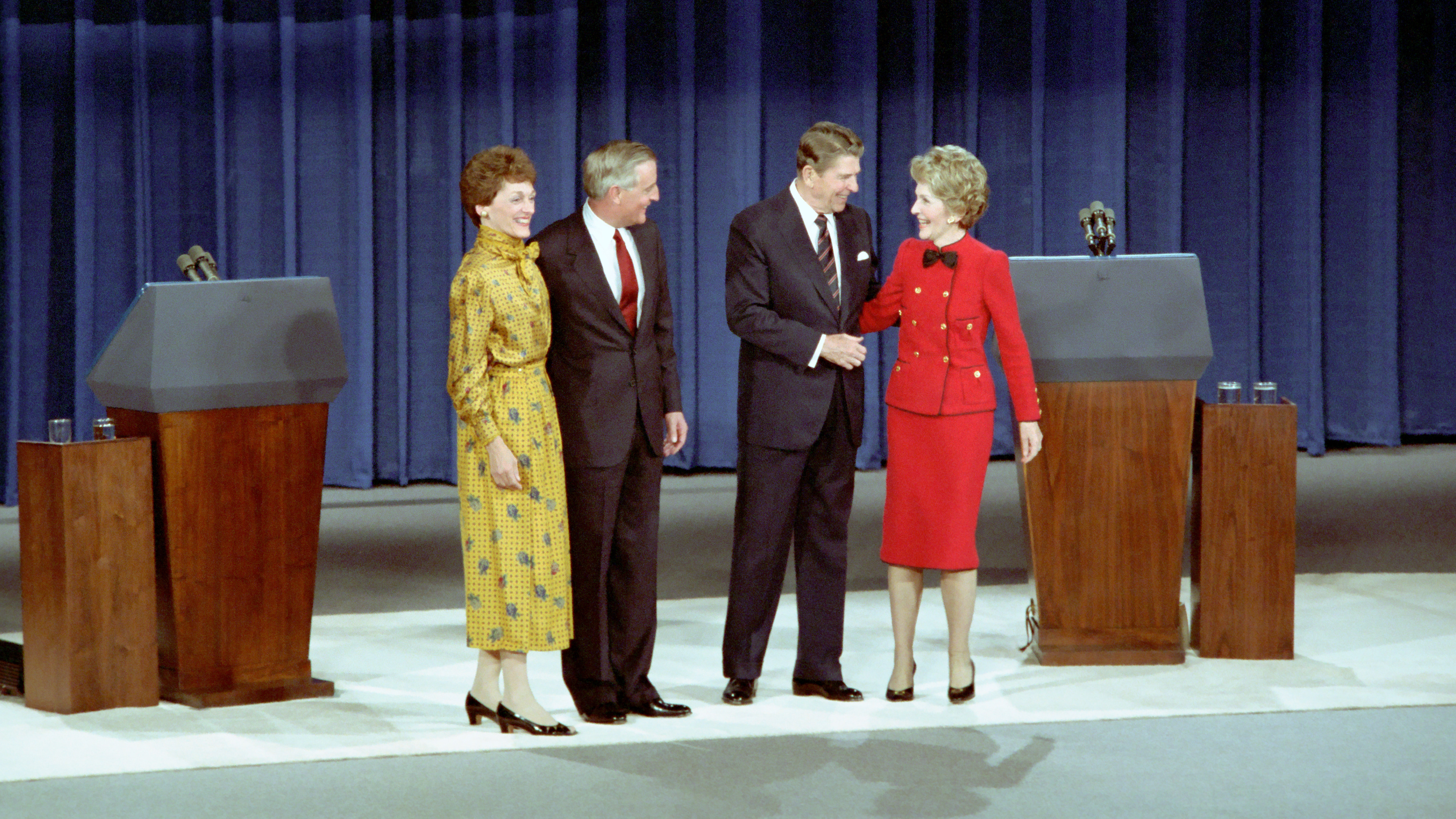
You just met two men asking for a nation's vote. Which would win more of your trust from a candidate?
Forty-Nine States and 3,761 Votes
Election Day was Tuesday, November 6, 1984. Reagan flew home to California to vote. In all, 55.2 percent of eligible Americans voted, the first time since 1960 that the turnout rate rose from one election to the next. State after state reported, and state after state went to Reagan and Bush. Reagan carried at least one county in every state.
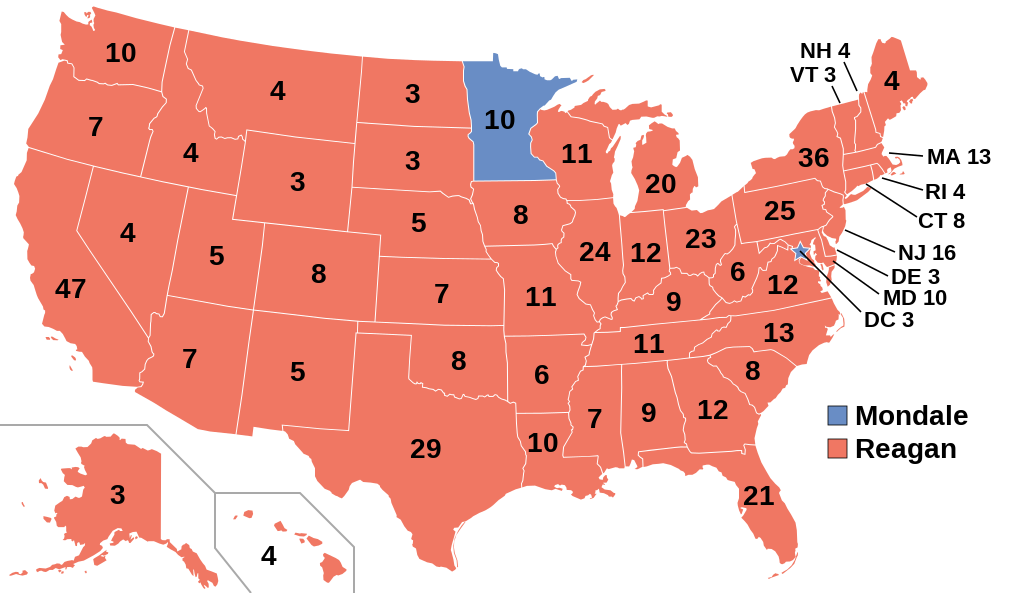
As you recall from the election of 1936, Alf Landon won only 8 electors against Franklin Roosevelt. Mondale's 13 were the fewest for a runner-up since then. His one state was the race in the nation. In Minnesota, Mondale won 49.72 percent and Reagan won 49.54 percent. Because Mondale won the most votes without winning more than half, he won the state by a plurality. The next-closest states both went to Reagan: Massachusetts, by 71,330 votes, and Rhode Island, by 14,974.

Six Voters in Ten, Ninety-Eight Electors in a Hundred
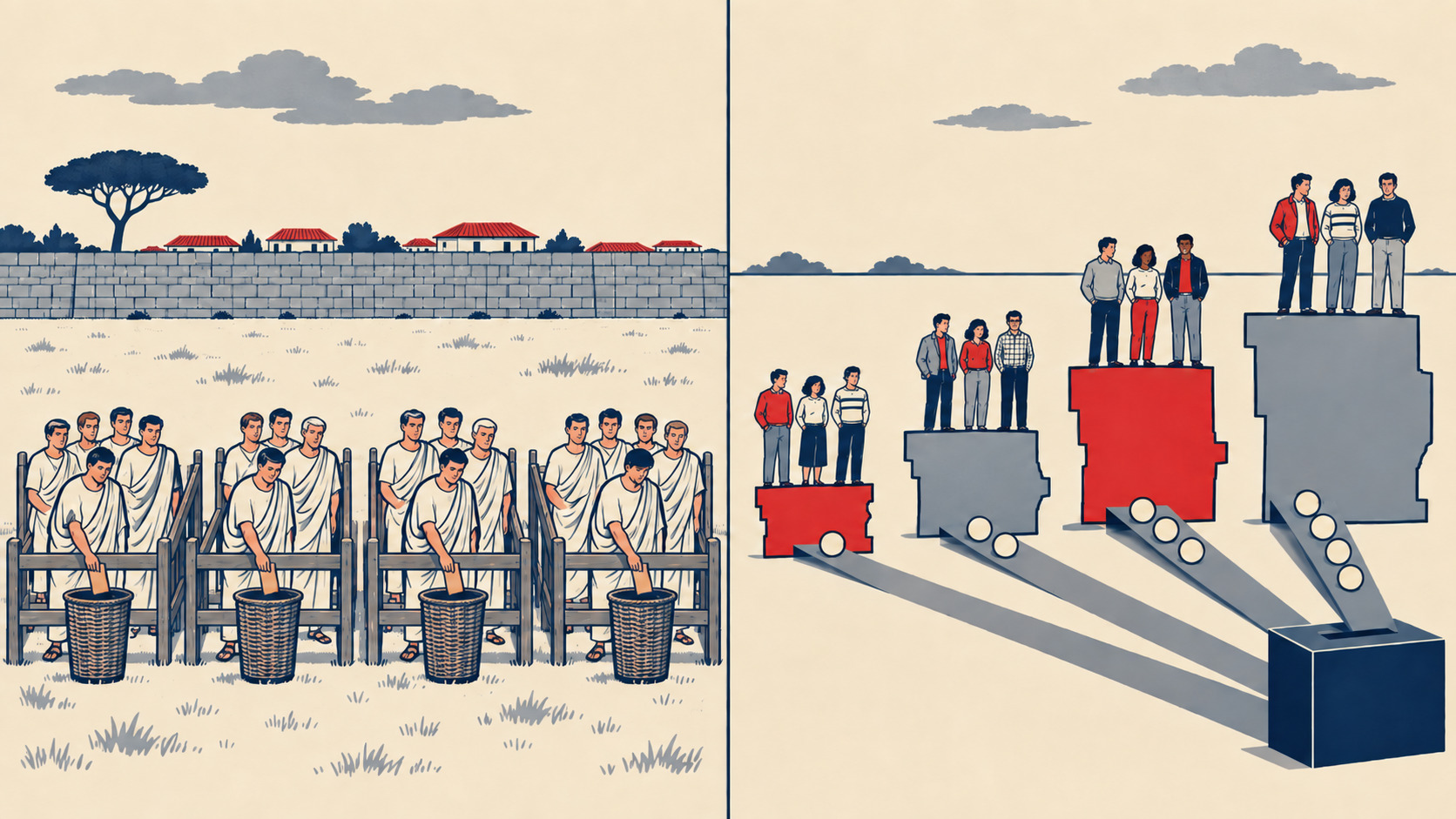
Here's where it tightens. Reagan won about six voters in ten. How did that become almost every elector? The answer lies in how each state hands out its electors.
The Magnanimity of Election Night
The virtue at the center of this lesson is magnanimity. The word comes from the Latin for "great soul." Magnanimity is the virtue of claiming exactly the honor you have earned — no more and no less — and of giving others the honor they have earned. A landslide tests it twice: once in the man who wins, and once in the man who loses.
The test came on the night of November 6. A concession is a candidate's public admission that he has lost. In St. Paul, Mondale gave his. He said he had called the President a few minutes earlier to congratulate him. Then he told his own supporters plainly what the count meant.
In Los Angeles, Reagan spoke in the ballroom of the Century Plaza Hotel at 9:31 p.m. When he told the crowd that Mondale had phoned him, the crowd began to boo. Reagan them. "No," he said, "to concede." He told them Mondale had said "we were all Americans, we'd go forward together." When the crowd cheered him, he answered that the credit belonged to the American people. The next day Mondale wished the President well and said of his own campaign, "I worked my heart out."
Mondale practiced magnanimity when he honored the man who had beaten him in 49 states. Reagan applied it when he quieted his own crowd for the man he had beaten. Aristotle figured this out a long time ago. He taught that the great-souled person claims great honor and is worthy of it. The vain person claims than he deserves. The small-souled person claims less.
Conclusion
Go back to St. Paul and that telephone call. One man had lost 49 states. He called the man who had won them, and then he told his own supporters, "He is our President, and we honor him tonight."
How the map changed. Reagan's 525 electoral votes set a record that no candidate through 2024 has broken. His 97.6 percent of the electors was the second-largest share since 1820, behind only Franklin Roosevelt's 98.5 percent in 1936. Through 2024, no candidate has again won 500 electors or led the popular vote by 10 points. On the map, the country looked almost all one color. In the voting booths, it was about six in ten. In the next lesson, the presidency will turn on one state decided by a far thinner margin than Minnesota's.
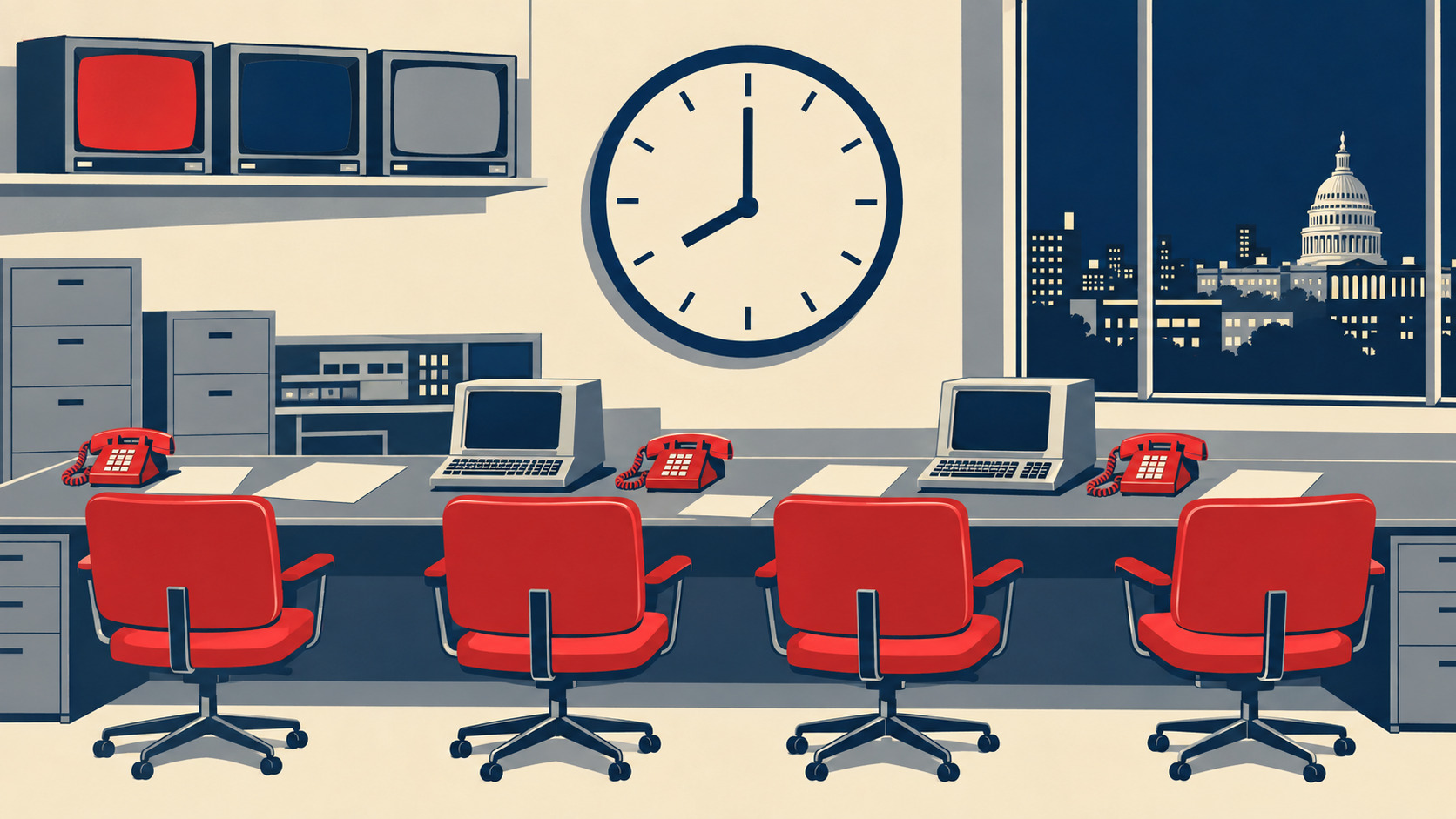
How the republic's character moved. The election of 1984 showed a people who could hand one ticket 49 states and then count the electors in 27 minutes, with no member objecting. It showed a loser who honored the winner, and a winner who quieted his own crowd. It was one election in the whole true history of the American vote, and it taught the difference between what a map shows and what the people said.
To live well is to practice magnanimity — to claim no more than you have earned, and to give the other side the honor it has earned.
Because elections are won and lost.
Parties rise and fall.
But the republic rests on its citizens.
Lesson Summary
Key Terms
- Popular vote
- the votes cast by the people themselves, counted across a state or the whole nation.
- Landslide
- an election won by a very wide margin.
- Running mate
- the candidate for vice president who runs beside a candidate for president.
- Ticket
- a candidate for president and a running mate who run together.
- Plurality
- the most votes, but not more than half of all the votes.
- Winner-take-all
- the rule by which the ticket with the most votes in a state takes all of that state's electors.
- Unit voting
- counting votes by group, so that each group casts its vote as one, as Rome's 35 tribes did.
- Joint session
- a meeting of the Senate and the House together, as when Congress counts the electoral votes.
- Concession
- a candidate's public admission that he has lost.
- Magnanimity
- greatness of soul; claiming exactly the honor you have earned and giving others the honor they have earned.
Cause-and-Effect Chart
| Key Fact | The Cause | The Effect |
|---|---|---|
| Reagan won 525 of 538 electors | He led in 49 states, and each of them gave him all its electors | The most electoral votes any candidate has ever received |
| Mondale won only 13 electors | He led only in Minnesota, by 3,761 votes, and in the District of Columbia | The fewest for a runner-up since Alf Landon's 8 in 1936 |
| 58.8 percent of the people became 97.6 percent of the electors | Winner-take-all counts a narrow state win the same as a wide one | From 1828 through 2024, every winner took a larger share of the electors than of the popular vote |
| Congress counted the votes in 27 minutes | No member objected to any state's certificate | Vice President Bush announced his own reelection on January 7, 1985 |
| The public inauguration moved indoors | It was 7°F at noon, with wind chills of 10 to 20 below zero | Reagan was sworn in under the Capitol dome, and the parade was canceled |
Timeline
| Person / Event | Date (AD) | Description |
|---|---|---|
| Mondale accepts the nomination | July 19, 1984 | In San Francisco, he pledges to cut the deficit by two-thirds and says he will raise taxes; Ferraro is nominated for vice president. |
| First presidential debate | October 7, 1984 | Reagan and Mondale meet in Louisville, Kentucky, before 65.1 million viewers. |
| Second presidential debate | October 21, 1984 | In Kansas City, Missouri, Reagan answers the question about his age with a joke. |
| Election Day | November 6, 1984 | Reagan carries 49 states; Mondale carries Minnesota by 3,761 votes and the District of Columbia. |
| The electors vote | December 17, 1984 | Electors meet in every state capital: 525 for Reagan, 13 for Mondale. |
| Congress counts the votes | January 7, 1985 | Vice President Bush presides over a 27-minute joint session and announces the result. |
| The private oath | January 20, 1985 | Inauguration Day falls on a Sunday; Reagan takes the oath inside the White House. |
| The public oath | January 21, 1985 | At 7°F, the ceremony moves into the Capitol Rotunda and the parade is canceled. |
COMMAND QUESTIONS
Factual Recall
The "Why" Questions
Write a short paragraph answering each question in your own words, in your notebook. Then check its box: +4 each.
Explain how Reagan could win about 59 percent of the popular vote but almost 98 percent of the electors. Use the winner-take-all rule and one state from the text in two or three sentences.
Rome's Tribal Assembly and the Electoral College both count votes by group. Explain one way they are alike and one way they are different.
Cast Your Ballot
you are a citizen voting on November 6, 1984 — one vote for one ticket; your state's electors all go to the ticket with the most votes in your state (in Maine, two to the statewide winner and one to the winner of each district)
Loading…
The ballot: 1984 — President and Vice President of the United States
Ronald Reagan and George Bush — Republican — keep the course of the recovery, rebuild the nation's defenses, and keep government from taking more of what people earn
Walter F. Mondale and Geraldine A. Ferraro — Democratic — cut the budget deficit by two-thirds in four years, even by raising taxes; freeze nuclear weapons; ratify the Equal Rights Amendment
David Bergland and Jim Lewis — Libertarian — the third-place ticket, on the ballot in 39 states
What a voter knew on November 6, 1984:
- Reagan, 73, was the sitting president; Mondale, 56, had been vice president from 1977 to 1981.
- Mondale had told his party's convention that he would raise taxes to cut the deficit.
- Unemployment had fallen from 10.6 percent in December 1982 to 7.7 percent by March 1984.
- Ferraro was the first woman ever on a major party's ticket.
- The last Gallup poll, taken November 2–3, showed Reagan at 57 percent and Mondale at 39 percent.
What the voters decided: Reagan and Bush, 54,455,472 votes (58.77 percent), 49 states and 525 electors; Mondale and Ferraro, 37,577,352 votes (40.56 percent), Minnesota and the District of Columbia and 13 electors.
Cast your own ballot on MockElection.com — vote as a citizen of 1984, with only what a citizen of 1984 knew. Then compare your count to history.
In 1984 about six voters in ten gave one ticket almost every elector. If you could set the rule for your own state, how would you hand out its electors?
Two games wait below
Whistle-Stop
The lesson’s words, against the clock. Twelve in a row earns the Blue Ribbon.
The Canvass
Match each cause to its effect, then each event to its year. Both boards with one miss or fewer earns the Clean Count.
0 of 100 points
Kept in this browser for this visit. Sign in to keep it on any device.