
Lesson 10 — 2016: Seven Electors Break Ranks
Votes, Electors, and a Pledge
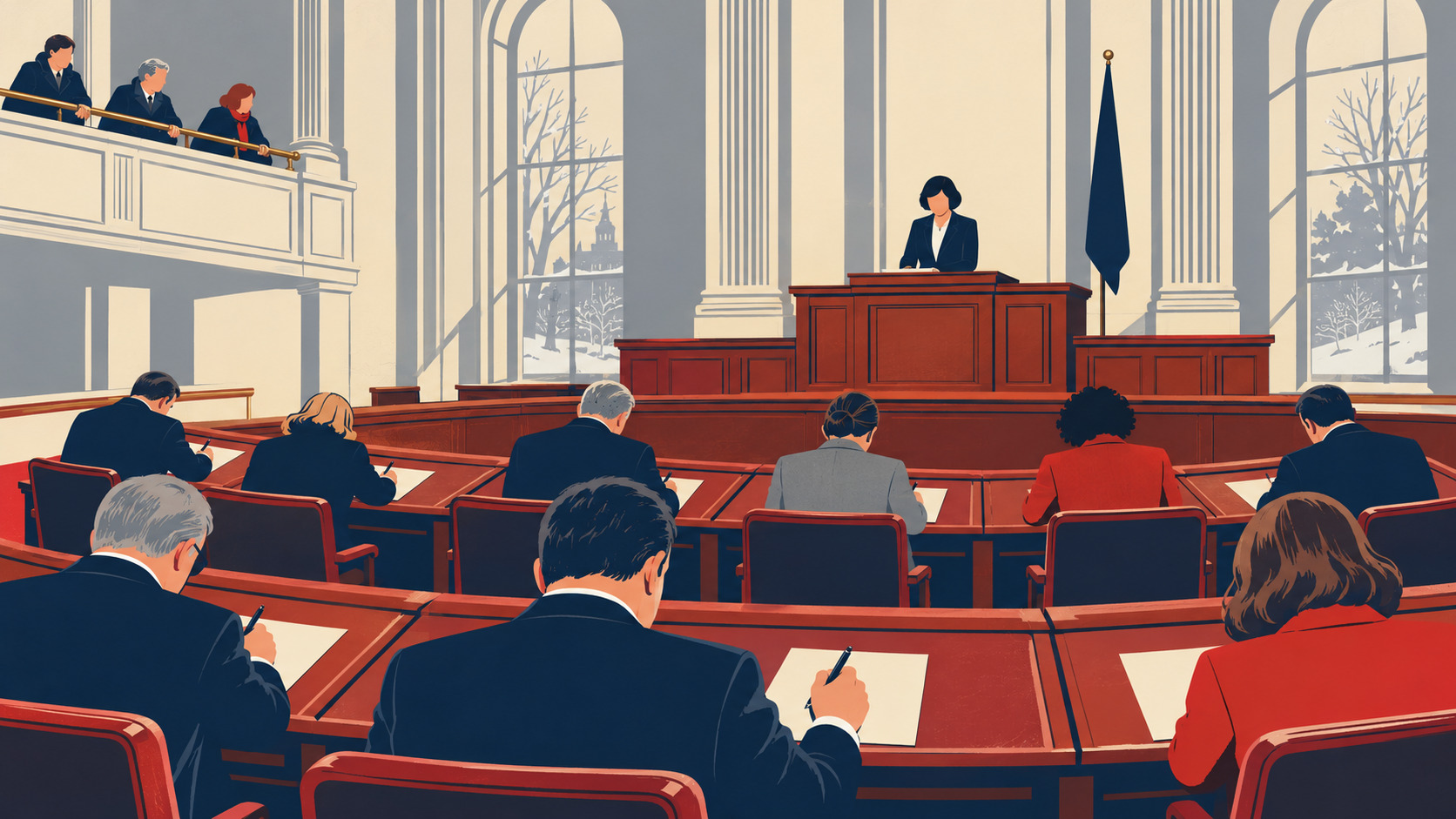
It is December 19, 2016, inside the Texas House chamber in Austin. Thirty-eight electors have come to cast the state's votes for president, and they mark their ballots in secret. Outside the Capitol, protesters are chanting, and the sound carries into the chamber. Every elector in the room has made a pledge to vote for the party's candidate. Across the country that day, most electors their pledges. Seven do not, and two of the seven sit in this room. When an elector promises one thing and does another, what happens to the count? And what is a pledge worth? Here is what was at stake. Hillary Clinton had won 2,868,686 more votes than Donald Trump across the country. Trump had won more electors. The electors' votes on December 19 would make the result official. At MockElection.com we want to make you a scholar of the republic. Let's see how a free people chose.
Four Tickets and a Promise
On November 8, 2016, Americans chose among four main tickets for president. The Republican, Donald Trump, ran with Mike Pence. The Democrat, Hillary Clinton, ran with Tim Kaine. Two smaller parties ran as well.
The Republican platform, adopted in Cleveland on July 18, 2016, opened with a belief in American exceptionalism. It said the Constitution was written "not as a flexible document, but as our enduring covenant." It promised to keep limited government, the separation of powers, and federalism.
No ticket's name, though, decided anything by itself on November 8. As you recall from Lesson 1, the Founding Fathers who framed the Constitution — the Framers — gave the vote for president to electors, not straight to the people. In 2016 there were 538 electors, and each party named its own slate in every state. A pledged elector promises to vote for the candidate of his or her party. In Texas, a Republican elector signed a written pledge to vote for the party's .
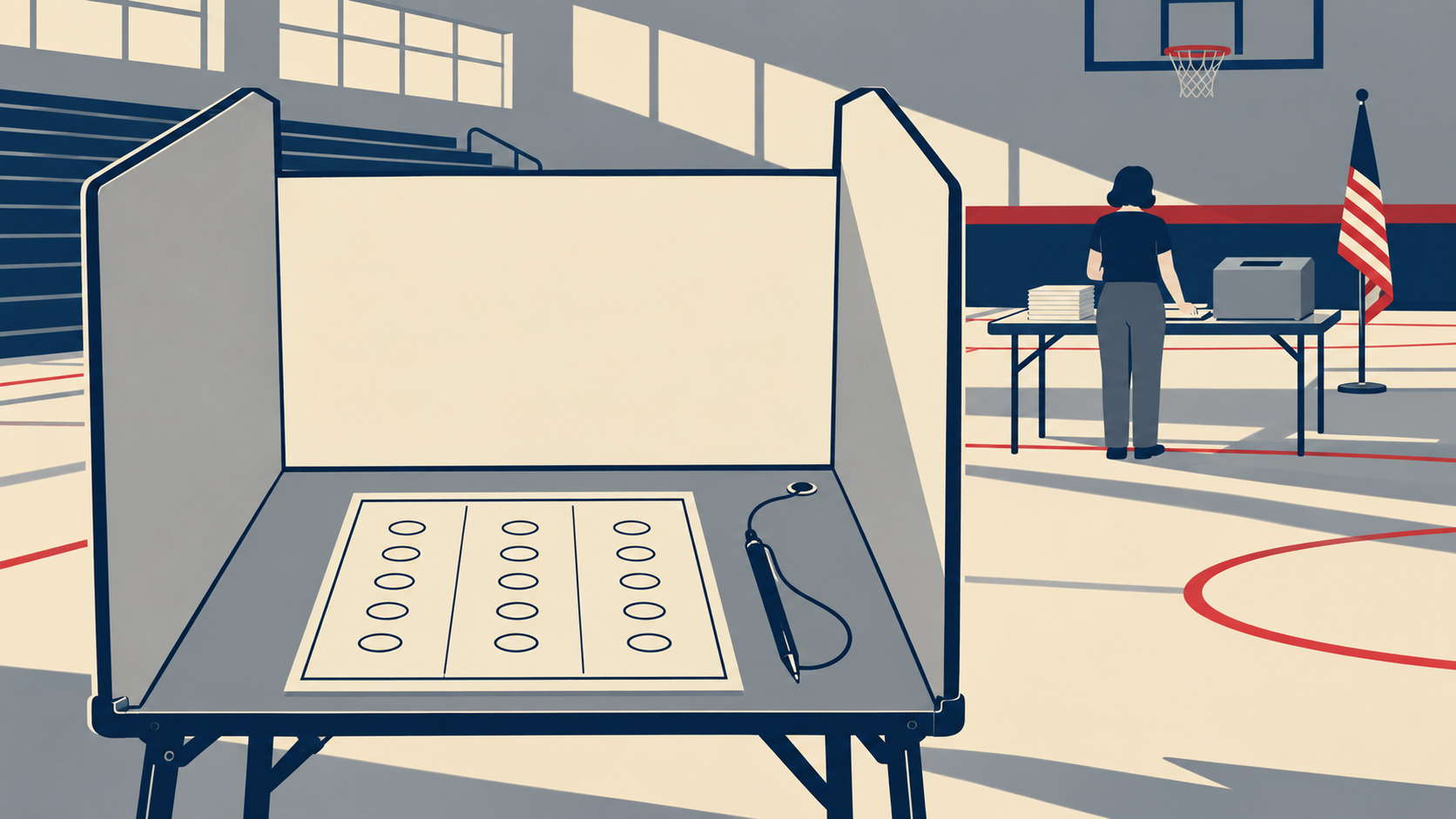
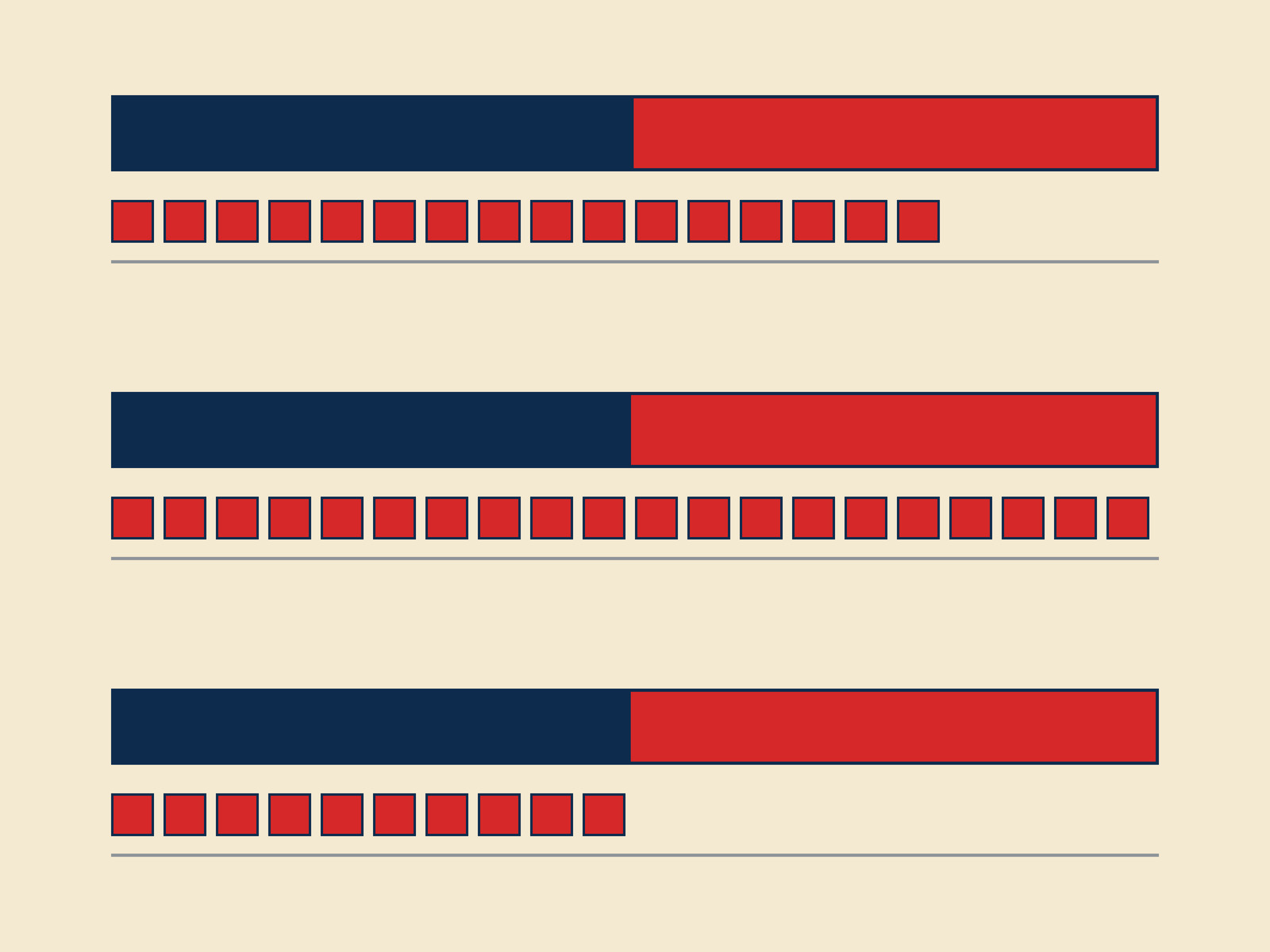
You just read that every elector made a pledge before November 8. If you were an elector, which rule would you want?
More Votes, Fewer Electors
Here is the count of 2016.
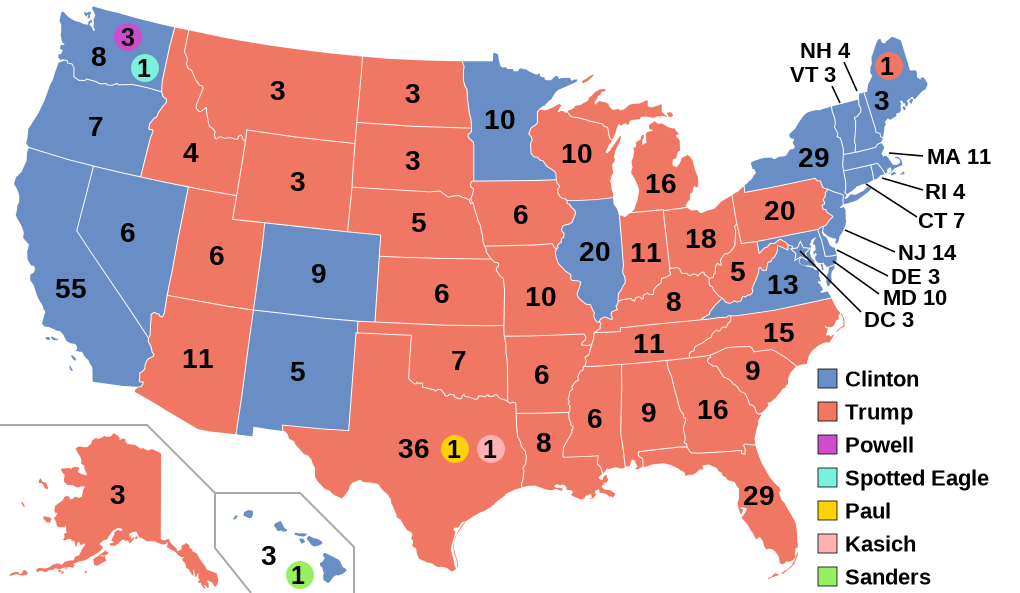
Clinton won the national popular vote by 2,868,686. Trump won 30 states, plus the elector chosen by Maine's second congressional district, for 306 pledged electors.
Jill Stein asked for a recount in Wisconsin and raised the money to pay for it. The recount Trump's win there.
This made 2016 the fifth time in American history that the national popular vote winner did not become president. As you recall, the others were 1824, 1876, 1888, and 2000.
December 19, 2016
Election Day chose the electors. In the weeks after it, electors across the country received floods of emails and calls, many of them urging a vote against Trump. Forty-one days after the election, they met in their state capitals to cast the official votes. In Harrisburg, Pennsylvania's 20 electors voted for Trump while hundreds of protesters demonstrated, and voices from the gallery shouted "Shame on you."
An elector who votes for someone other than the candidate he or she pledged to is called a faithless elector. On December 19, seven electors were faithless.
Their reasons . Chiafalo helped lead the "Hamilton Electors," who hoped to persuade 37 of Trump's electors to vote for someone else. That would have left Trump short of 270 and sent the choice to the House of Representatives. Suprun had announced weeks earlier that he would vote for Kasich. Greene said Paul was the best person in the country to be president. Satiacum cast his vote to protest Clinton's support for the Dakota Access Pipeline. Mulinix said he believed the Electoral College was outdated.
Nothing in the Constitution requires an elector to follow the state's result. So each state wrote its own rule, and in 2016 the rules did not agree.
What a Pledge Could Bind
The Hamilton Electors had not chosen their name by accident. The Founding Fathers had built the elector on purpose, and they built it out of an old fear.
Hamilton wanted electors who would weigh the choice for themselves. The parties wanted electors who would keep their word. On December 19, 2016, both ideas sat in the same chair.
On January 6, 2017, Congress met in joint session to count the electors' votes, with Vice President Joe Biden presiding. Tellers announced each state's result, beginning with Alabama. Some members raised objections to several states' votes, but none was sustained. The count stood at 304 for Trump and 227 for Clinton. The seven faithless votes changed the count, but they did not change the . Trump's 304 stood far above 270.
The Loyalty of a Pledge
The virtue in this lesson is loyalty. Loyalty means keeping faith — staying true to a promise and to the people who trusted you to keep it.
Of the 538 electors, 531 their pledges and practiced loyalty under pressure. Seven did not. The breaks came from both parties: two Republicans and five Democrats. Every one of the 538 had been named by a party that trusted the pledge, and every one faced the same choice on the same day.
One elector chose a third road before December 19 ever came. Art Sisneros, a Republican elector from Dayton, Texas, had signed his party's pledge. By late November he had decided he could not vote for Trump "in good conscience." He saw three roads: vote for the nominee, vote for someone else and become a faithless elector, or resign. But he would not break his word, either. He resigned, and on December 19 the other Texas electors chose someone to take his seat. He later explained, in an interview, that he had won the seat on the strength of that promise: "People elected me on the basis of the pledge." His choice cost him death threats and lost sleep.
Bill Greene, who had also signed a pledge, saw it another way. He said laws binding electors to a party's nominee went against the Constitution, and he did not feel bound once he was chosen.
Cicero figured this out a long time ago. In his book On Duties, he wrote that the foundation of justice is good faith — keeping to what you have said and what you have agreed. His Latin word was fides, the root of the English word "faith," and of "faithless" too.
But loyalty is not the same as never thinking for yourself. The Framers made the elector a real person with a real vote. The seven who broke ranks held that their judgment outweighed their pledge. Sisneros held that his pledge outweighed his seat. This lesson leaves the question with you: when does an elector's own judgment outweigh the pledge, and when is it simply a broken promise?
Conclusion
Go back to the Texas House chamber on December 19, 2016, with the chanting outside. Two of its electors broke their pledges. Across the country, 531 of the 538 kept theirs.
How the map changed. Trump won 30 states and Maine's second congressional district, with 306 pledged electors. On January 6, 2017, Congress counted 304 electoral votes for him and 227 for Clinton, and he took office on January 20, 2017. Clinton won the national popular vote by 2,868,686, 48.2 percent to 46.1 percent. Johnson won 4,492,919 votes and Stein 1,449,370, with no electors. Maine split its electors for the first time under its district rule.
How the republic's character moved. In 2016 the electors reminded the country that they are real people with real votes, as the Framers designed them. Seven used that vote as their own; 531 kept faith with their pledge; and the states found that their laws on faithless electors did not agree. It was one election in the whole true history of the American vote. In the next lesson, the 2017 election for a seat in Virginia's House of Delegates, you will see the smallest possible margin of all — and how the law settles a perfect tie.
To live well is to keep faith — to keep your word to the people who trusted you, and to think hard before you ever give it.
Because elections are won and lost.
Parties rise and fall.
But the republic rests on its citizens.
Lesson Summary
Key Terms
- Framers
- the Founding Fathers who framed the Constitution and built its structure, including the electors.
- Pledged elector
- an elector who promises to vote for the candidate of his or her party.
- Faithless elector
- an elector who votes for someone other than the candidate he or she pledged to.
- Winner take all
- the rule under which the candidate who wins a state wins all of its electors.
- Write-in
- a vote for a person whose name is not printed on the ballot.
- Mob
- from the Latin mobile vulgus, "the movable crowd" — a crowd stirred to sudden action.
- Checks and balances
- a design in which each part of a government can stop or slow another, so that a sudden passion cannot carry the whole.
- Loyalty
- keeping faith with a promise and with the people who trusted you to keep it.
Cause-and-Effect Chart
| Key Fact | The Cause | The Effect |
|---|---|---|
| Trump won 306 pledged electors | He won Michigan, Pennsylvania, and Wisconsin by 77,744 votes combined, under winner take all | He won the Electoral College while losing the popular vote |
| Clinton led the popular vote by 2,868,686 | She won more votes nationwide | 2016 became the fifth split between the popular vote and the Electoral College |
| Maine's electors split 3 to 1 | Maine gives one elector to the winner of each congressional district | Trump won one Maine elector through the second district |
| The official count was 304 to 227 | Seven electors broke their pledges on December 19, 2016 | Seven electoral votes went to five people not on the ballot |
Timeline
| Person / Event | Date (AD) | Description |
|---|---|---|
| Libertarian Party founded | 1971 | Founded for free markets and strict limits on government. |
| Republican platform adopted | July 18, 2016 | Adopted in Cleveland. |
| Democratic platform adopted | July 25, 2016 | Adopted in Philadelphia. |
| Election Day | November 8, 2016 | Trump wins 306 pledged electors; Clinton wins the popular vote by 2,868,686. |
| Art Sisneros resigns as a Texas elector | November 2016 | He resigns rather than break his pledge or vote against his conscience. |
| Electors meet | December 19, 2016 | Seven faithless electors; official count 304 to 227. |
| Congress counts the electoral votes | January 6, 2017 | Joint session declares 304 for Trump and 227 for Clinton. |
| Inauguration | January 20, 2017 | Trump takes office. |
COMMAND QUESTIONS
Factual Recall
The "Why" Questions
Write a short paragraph answering each question in your own words, in your notebook. Then check its box: +4 each.
Explain in two or three sentences how narrow wins in three states could outweigh a national popular vote lead of 2,868,686.
Washington's four faithless votes counted, but the switched votes in Maine, Minnesota, and Colorado did not. Using the text, explain why the same act had different results in different states.
Cast Your Ballot
one vote for a ticket; each state's electors go to the ticket that carries the state, winner take all, except Maine and Nebraska, which give two electors to the statewide winner and one to the winner of each congressional district
Loading…
The ballot: 2016 — President
Ticket 1: Donald Trump and Mike Pence — Republican — American exceptionalism, the Constitution as an enduring covenant, limited government, separation of powers, and federalism.
Ticket 2: Hillary Clinton and Tim Kaine — Democratic — "stronger together": an economy that works for everyone, rising incomes and good-paying jobs, and every citizen's right to vote protected.
Ticket 3: Gary Johnson and Bill Weld — Libertarian — free markets, strict constitutional limits on government, civil liberties, and staying out of other nations' wars.
Ticket 4: Jill Stein and Ajamu Baraka — Green — protecting the environment, social justice, non-violence, and grassroots democratic reform.
What a voter knew on November 8, 2016:
- The president is chosen by 538 electors, state by state — winner take all in every state but Maine and Nebraska.
- 270 electoral votes are needed to win.
- Four main tickets are on the ballot.
- The electors will cast the official votes on December 19.
What the voters decided: Clinton won the popular vote, 65,853,514 to 62,984,828; Trump won 306 pledged electors, made official at 304 to 227.
Cast your own ballot on MockElection.com — vote as a citizen of 2016, with only what a citizen of 2016 knew. Then compare your count to history.
Picture yourself as a pledged elector on December 19, 2016. Which virtue would you need most when you cast your vote?
Two games wait below
Whistle-Stop
The lesson’s words, against the clock. Twelve in a row earns the Blue Ribbon.
The Canvass
Match each cause to its effect, then each event to its year. Both boards with one miss or fewer earns the Clean Count.
0 of 100 points
Kept in this browser for this visit. Sign in to keep it on any device.