
Lesson 13 — 1989: The Man Who Ran Alone and Lost
A Booth, a Line, and a Union
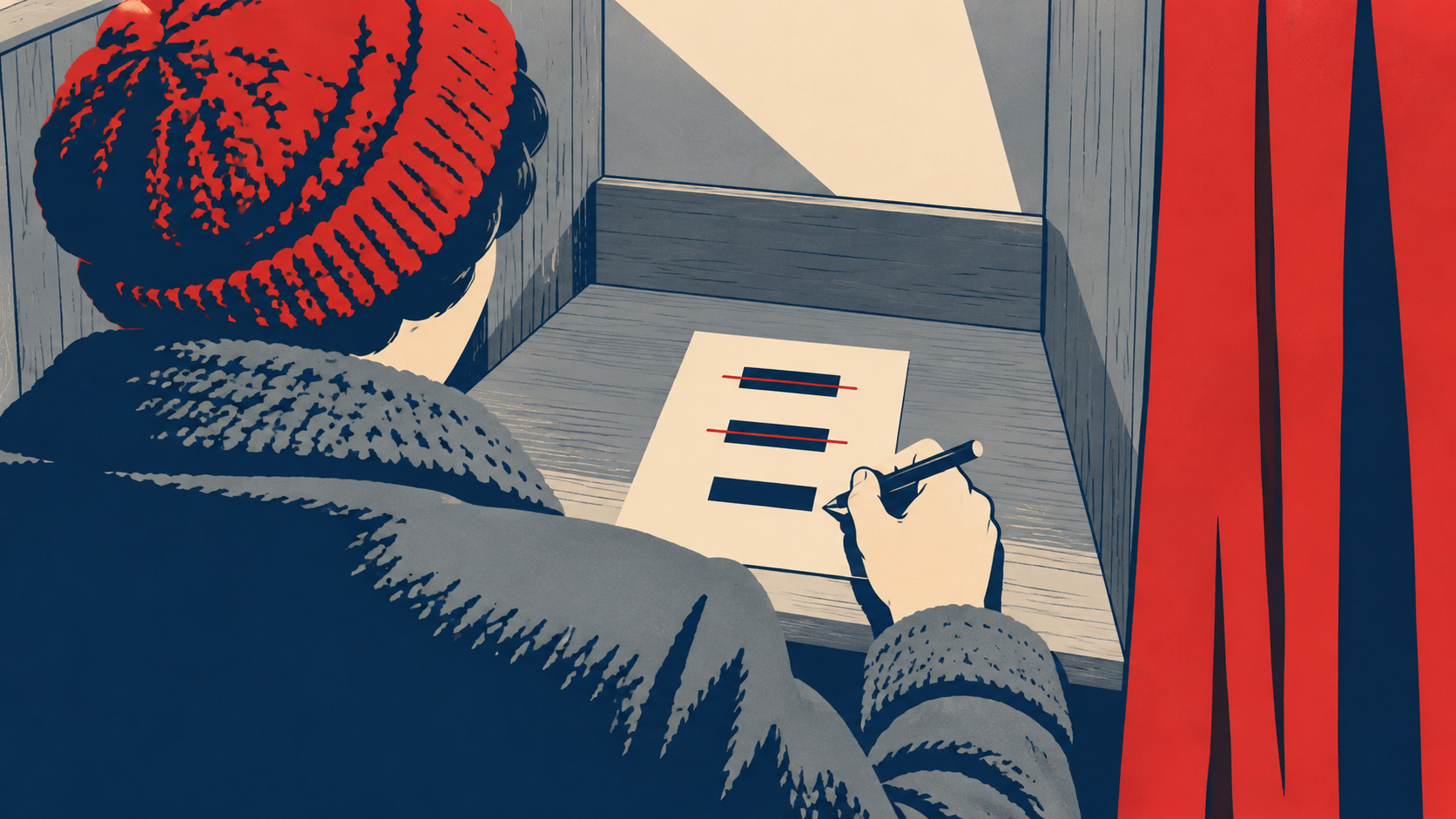
Picture yourself as a voter in the Leningrad region on Sunday, March 26, 1989. You step into a private voting booth. Your ballot holds one name: Yuri Solovyov. He is the Communist Party's chief in the Leningrad region and a candidate member of the Politburo, the party's ruling council. No one is running against him. To vote for him, you leave his name alone. To vote against him, you draw a line through it. About 60 percent of the voters in his district draw that line. A man with no opponent has his election. How can that happen? Here is what was at stake. Since the constitution of 1936, the Soviet Union had held elections with one name for each seat, and the official counts ran above 99 percent. Now its leader, Mikhail Gorbachev, had changed the rules. He hoped open contests would renew his party. The same rules let millions of voters say no to it. At MockElection.com we want to make you a scholar of the republic. Let's see how another people chose.
A Union of Fifteen Republics
Every word in the country's name meant something. The Union of Soviet Socialist Republics was founded on December 30, 1922. Four Soviet republics joined to form it: Russia, Ukraine, Belorussia and the Transcaucasian federation. From 1956 on, the union held 15 union republics, from Estonia on the Baltic Sea to Kazakhstan in Central Asia. A soviet is a council, and in the Soviet Union every level of government, from a village to the whole country, was run by an elected soviet. "Socialist" carried the meaning you met in Lesson 12: the first stage on Marx's road to communism.
As you recall from the election of 1953–1954, China borrowed its single-candidate ballot from Soviet election law. The Soviet rules were older. The constitution of 1936 gave every citizen eighteen and older the vote. It even said, in Article 140, that voting was secret. The constitution of 1977 kept those rules, and its Article 6 guaranteed that the Communist Party alone would lead the country.
Feel the weight of that for a second. As you recall from the election of 1984, Ronald Reagan carried 49 states that November with 58.77 percent of the popular vote, and Americans called it a landslide. Eight months earlier, the Soviet bloc's candidates had won 99.94 percent.
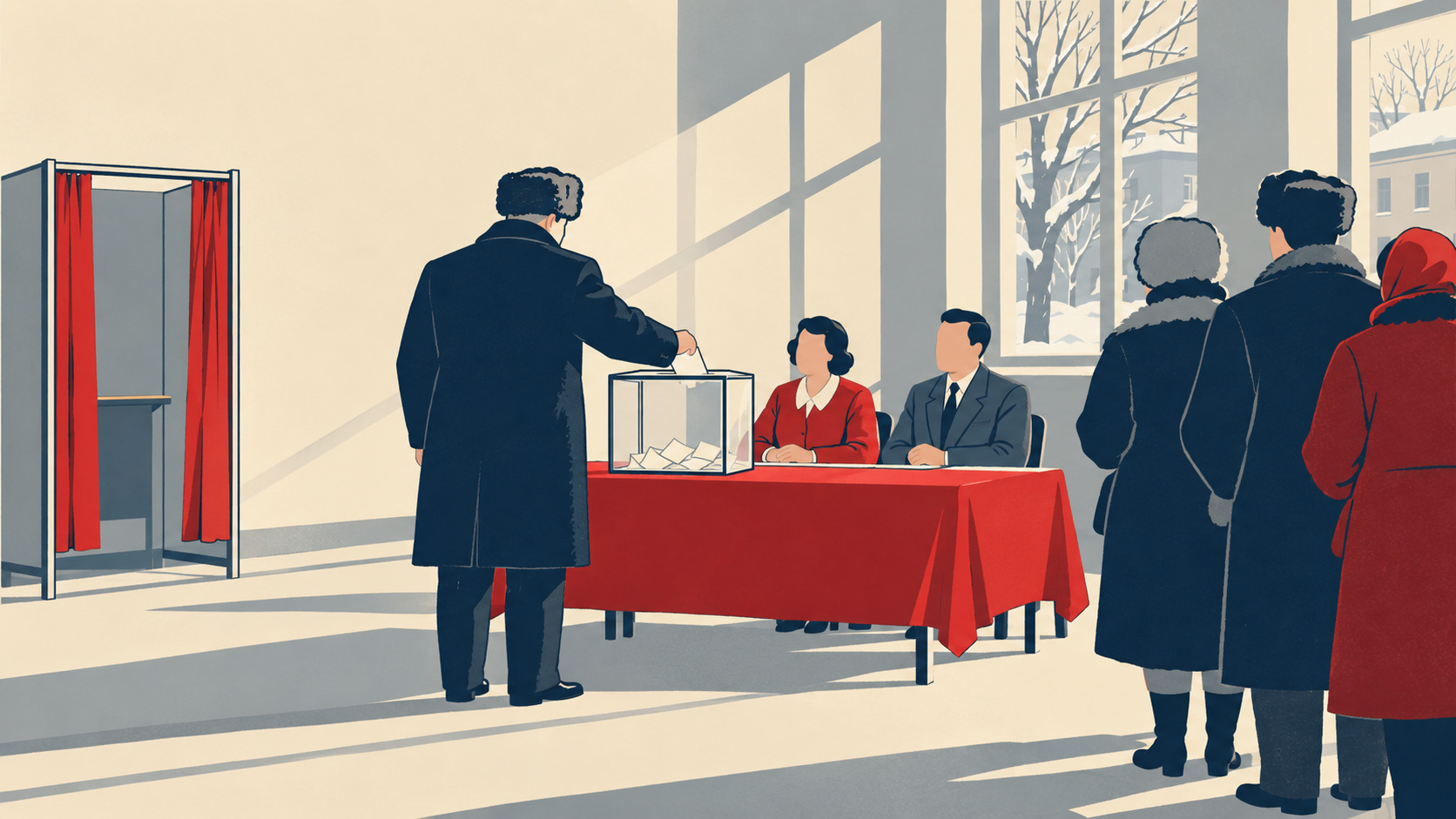
The ballot asked a voter to one name. It did not ask him to choose between two.
In 1984 a Soviet voter could vote yes by dropping his ballot in the box, but to vote no he had to walk into the booth while others watched. Which rule would you keep for your own class elections?
Gorbachev Opens the Booth
On March 11, 1985, the party's Politburo chose Mikhail Gorbachev as General Secretary, the leader of the party and the country. He took over an economy that had stopped growing and a party run by officials who did not want to change. Gorbachev answered with two words. Perestroika meant restructuring: rebuilding the economy. Glasnost meant openness: letting people speak and print more of the truth about their country. He meant to save the socialist system, not to end it. To get around the officials who blocked him, he turned to the voters.
In June 1988 Gorbachev called the party's 19th Conference, its first since 1941. There he proposed a new national legislature, the Congress of People's Deputies. The plan was published for public comment on October 2, 1988. From November 29 to December 1, the old Supreme Soviet changed the 1977 Constitution, passed a new election law, and set the election for March 26, 1989.
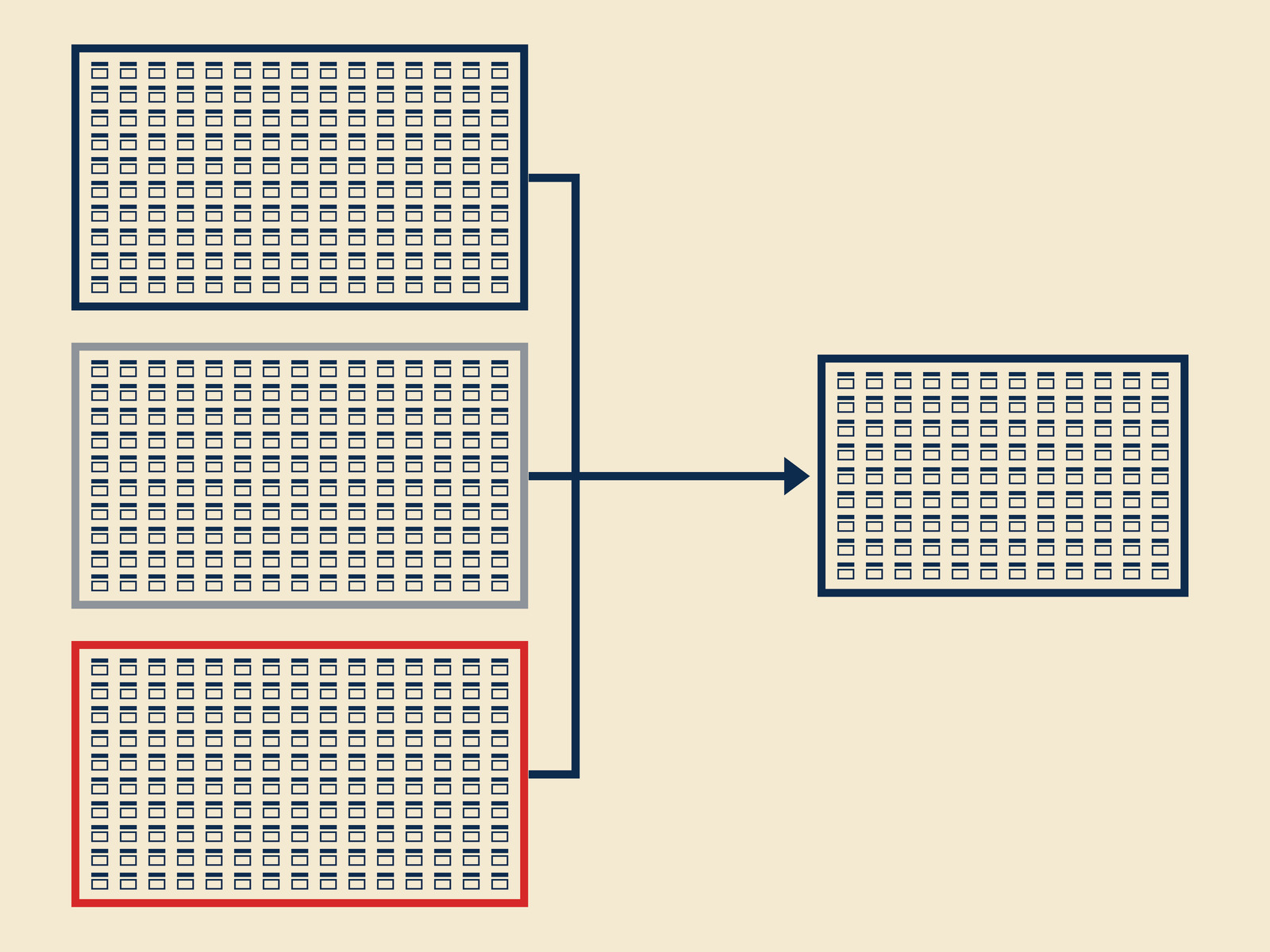
The Congress would hold 2,250 deputies, chosen three ways. 750 came from districts of equal population. 750 came from districts drawn by nationality: 32 from each union republic, 11 from each autonomous republic, 5 from each autonomous region and 1 from each autonomous area. Every voter cast two ballots, one for each kind of district. The last 750 seats went to public organizations. The Communist Party got 100 and the trade unions 100. The Komsomol, the Soviet Women's Committee and the veterans' organization got 75 each. The other 325 went to groups such as the Academy of Sciences. The Congress would then choose a smaller Supreme Soviet of 542 members to do the daily work of making laws.
Sunday, March 26, 1989
The polls opened across twelve time zones, from Sakhalin Island in the Far East to the Baltic republics in the west. When the count came in, 89.8 percent of voters had taken part: 172,840,130 of 192,575,165. The first round filled 1,958 of the 2,250 seats, including 1,225 district seats.
In Moscow, one race drew the whole country's eyes. Boris Yeltsin, 58, had been the party's chief in Moscow until he was removed in 1987. He ran for the at-large seat covering the whole city. He campaigned against privileges for top officials and against the economic failures that had emptied the shelves of Soviet stores. On March 19, several thousand of his supporters had marched through central Moscow chanting against party bureaucrats. The party establishment openly backed his opponent, Yevgeny Brakov, the director of an automobile factory that built limousines for senior officials. Yeltsin won 89.4 percent of the vote. Brakov won 6.9 percent.
In Leningrad, Solovyov was not the only loser. At a Politburo meeting on March 28, he reported that all seven party leaders in Leningrad had been defeated. Anatoli Gerasimov, secretary of the city's party committee, won only 15 percent and lost to Yuri Boldyrev, a shipyard worker. The mayor of Moscow, Valery Saikin, lost. In Kiev, the head of the city council, Valentyn Zghursky, lost. Across the country, 38 regional party secretaries lost their races. Runoffs in 76 districts were held on April 2 and 9. Fresh elections in 199 more ran on April 20 and from May 14 to 23. When it was over, about 87 percent of the deputies were party members. The party kept most of the seats, but it could no longer claim the of nearly every voter.
The Congress on Live Television
The Congress of People's Deputies opened in Moscow on May 25, 1989. For two weeks its debates ran on live television, before an estimated 100 million viewers. Deputies stood up and spoke against shortages, scandals and the privileges of party officials.
Its first vote was for chairman of the new Supreme Soviet. Alexander Obolensky, a 46-year-old engineer from Leningrad, nominated himself to run against Gorbachev. He said he did not expect to win; he wanted to set a precedent for contested elections. The Congress voted 1,415 to 689 to keep his name off the ballot. Gorbachev ran alone and won 95.6 percent of the vote, with 87 deputies voting against him. On May 29 the Congress also elected Yeltsin to the Supreme Soviet.
On June 9, the last day of the session, Sakharov came to the rostrum. He was given five minutes and spoke for fifteen. He read out a program to end the party's control of the state. Gorbachev was chairing the session. He told Sakharov his time was up and asked whether he respected the Congress. Sakharov answered: "Yes, but I respect the country and the people more." His microphone was cut off. He kept anyway.
What followed came fast. On March 11, 1990, Lithuania declared its independence. On March 14, 1990, the Soviet government repealed Article 6 and ended the party's guaranteed rule. The next day the Congress elected Gorbachev the first President of the Soviet Union. In August 1991 party hardliners tried to overthrow him, and failed. On December 8, 1991, the leaders of Russia, Ukraine and Belarus declared that the Soviet Union no longer existed. Gorbachev resigned on December 25. On December 26, 1991, the Union of Soviet Socialist Republics was formally dissolved, and its 15 republics went their own ways.
The Courage to Say No
The virtue this election tested was courage: doing what is right when it is hard or dangerous. In 1984, saying no took courage, because a voter had to walk to the booth while others watched. 109,078 voters made that walk for the Soviet of the Union. In 1989, the law sent every voter into a private booth. The booth carried part of the weight, and millions of voters said no without having to stand out from their neighbors. That left the hardest courage to the people who said no . The scientists who rallied for Sakharov stood outside the Academy where everyone could see them. The engineer from Leningrad put his own name forward against Gorbachev. And Sakharov kept speaking at the rostrum after his microphone was cut.
Aristotle wrote that the brave man is not the one who fears nothing. He fears what he ought to fear, for the right reason, in the right way, and at the right time, and he acts anyway.
Conclusion
Go back to the booth in the Leningrad region on March 26, 1989. One name was on the ballot, and about 60 percent of the voters drew a line through it.
How the map changed. In 1984, 750 seats had 750 candidates, and the official count gave them 99.94 percent. In 1989, 5,074 candidates competed for 1,500 district seats, and 38 regional party secretaries lost. On March 14, 1990, the party's guaranteed rule was written out of the Constitution. Between 1990 and 1991, all 15 union republics broke away, and on December 26, 1991, the Union of Soviet Socialist Republics ceased to exist. Its last national election had been the one that let its voters say no.
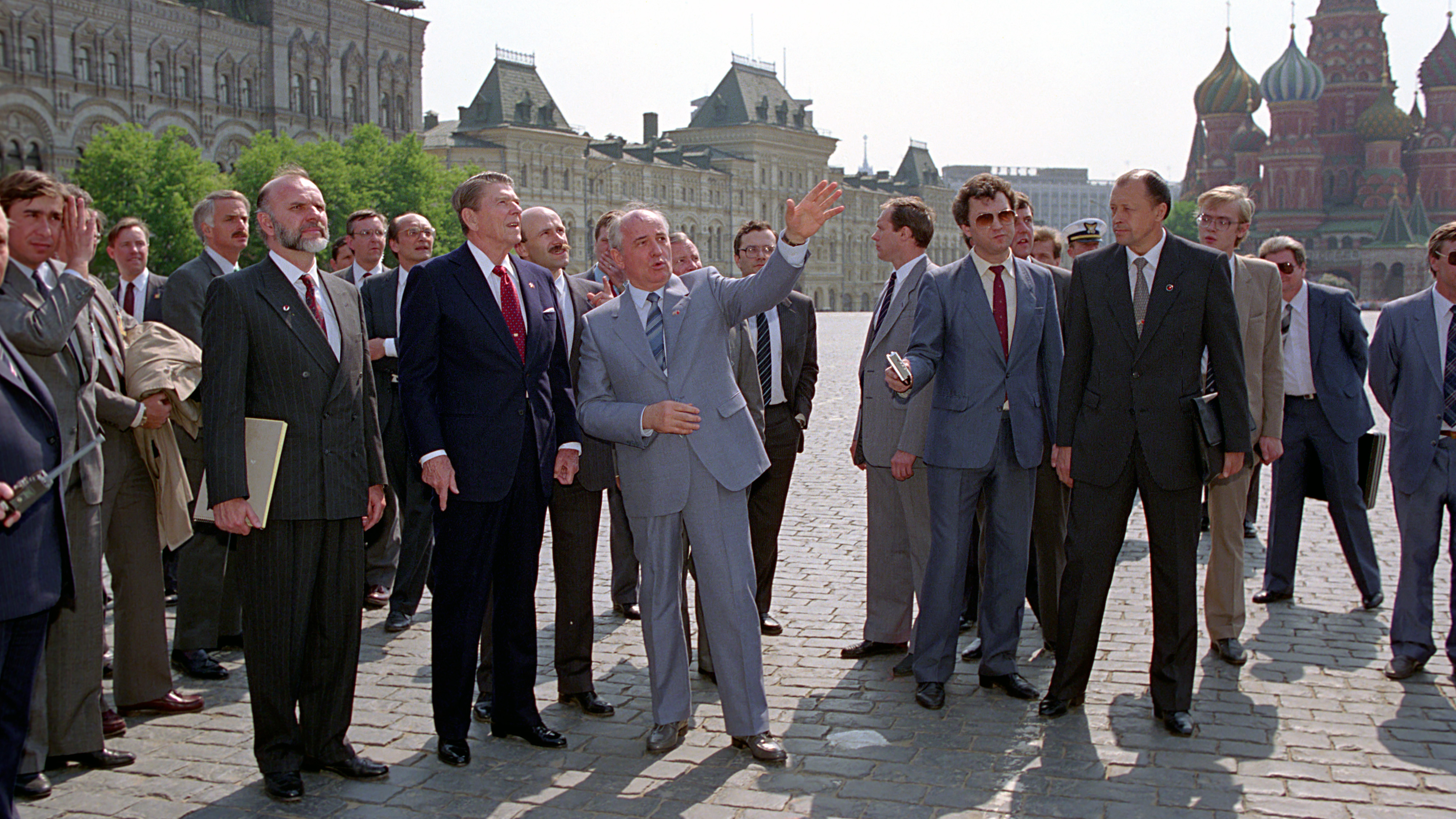
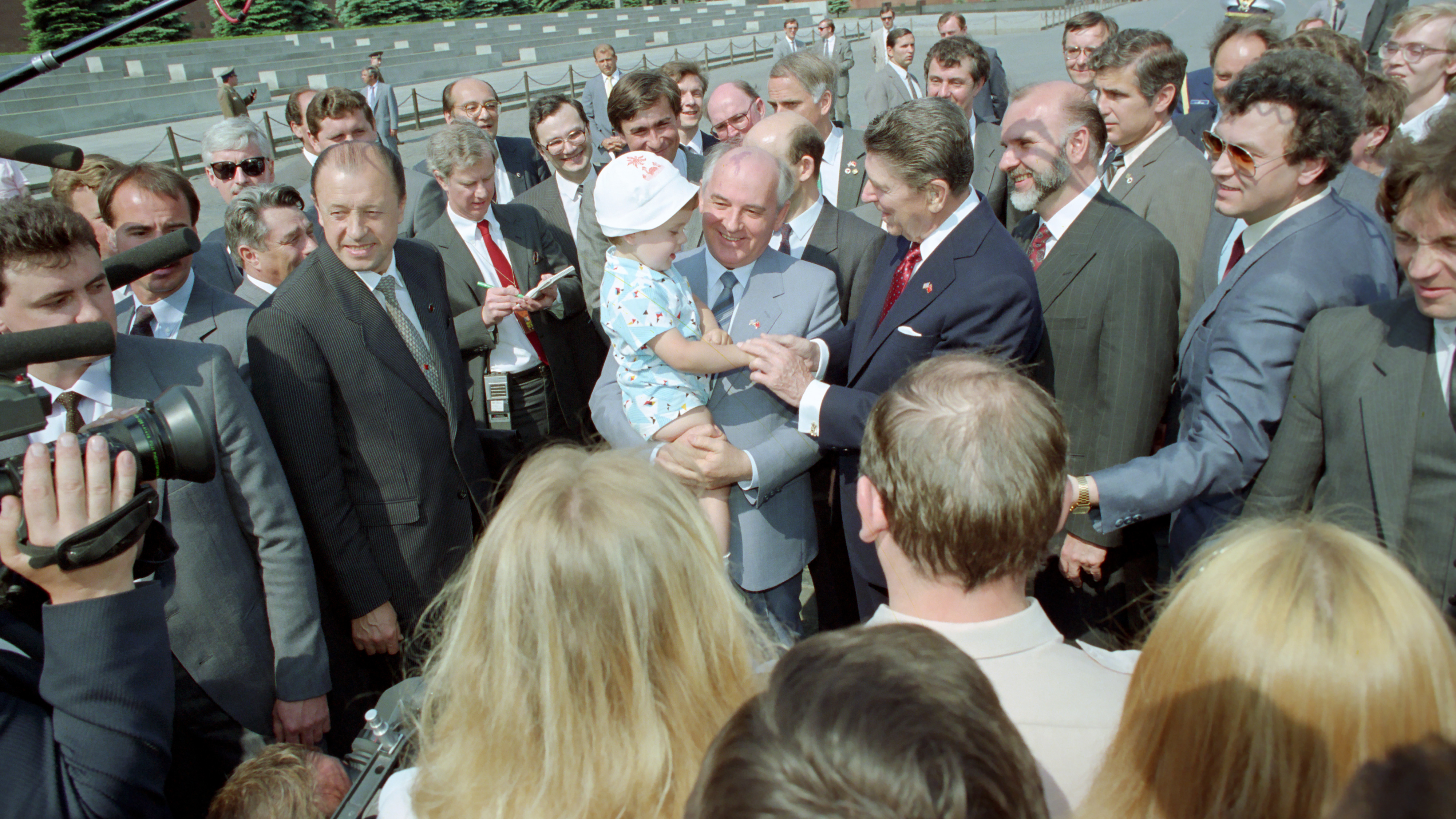
How the republic's character moved. For more than fifty years, Soviet voters had been asked only to approve. Then they were given a private booth and a real choice. They used it at once, in every region, to reject the men who had run their lives. A people that has been silent for decades has not stopped holding opinions. It was one election in the whole true history of the vote. In 1988 Reagan had walked through Red Square, and on June 2 he flew from Moscow to London to meet Prime Minister Margaret Thatcher. In the next lesson you will meet the voters who kept her in power, in the election of 1983.
To live well is to say no when you must, even when no one else is saying it, and to say it for the right reason.
Because elections are won and lost.
Parties rise and fall.
But the republic rests on its citizens.
Lesson Summary
Key Terms
- Union republic
- one of the 15 republics that made up the Soviet Union from 1956 to 1991.
- Soviet
- an elected council; in the Soviet Union, every level of government was run by one.
- Perestroika
- "restructuring," Gorbachev's plan to rebuild the Soviet economy.
- Glasnost
- "openness," Gorbachev's policy of letting people speak and print more freely.
- Line-out vote
- a ballot marked by crossing out the names of the candidates you reject and leaving your choice untouched.
- Absolute majority
- more than half of all the votes cast.
- Runoff
- a second round of voting held when no candidate wins an absolute majority in the first.
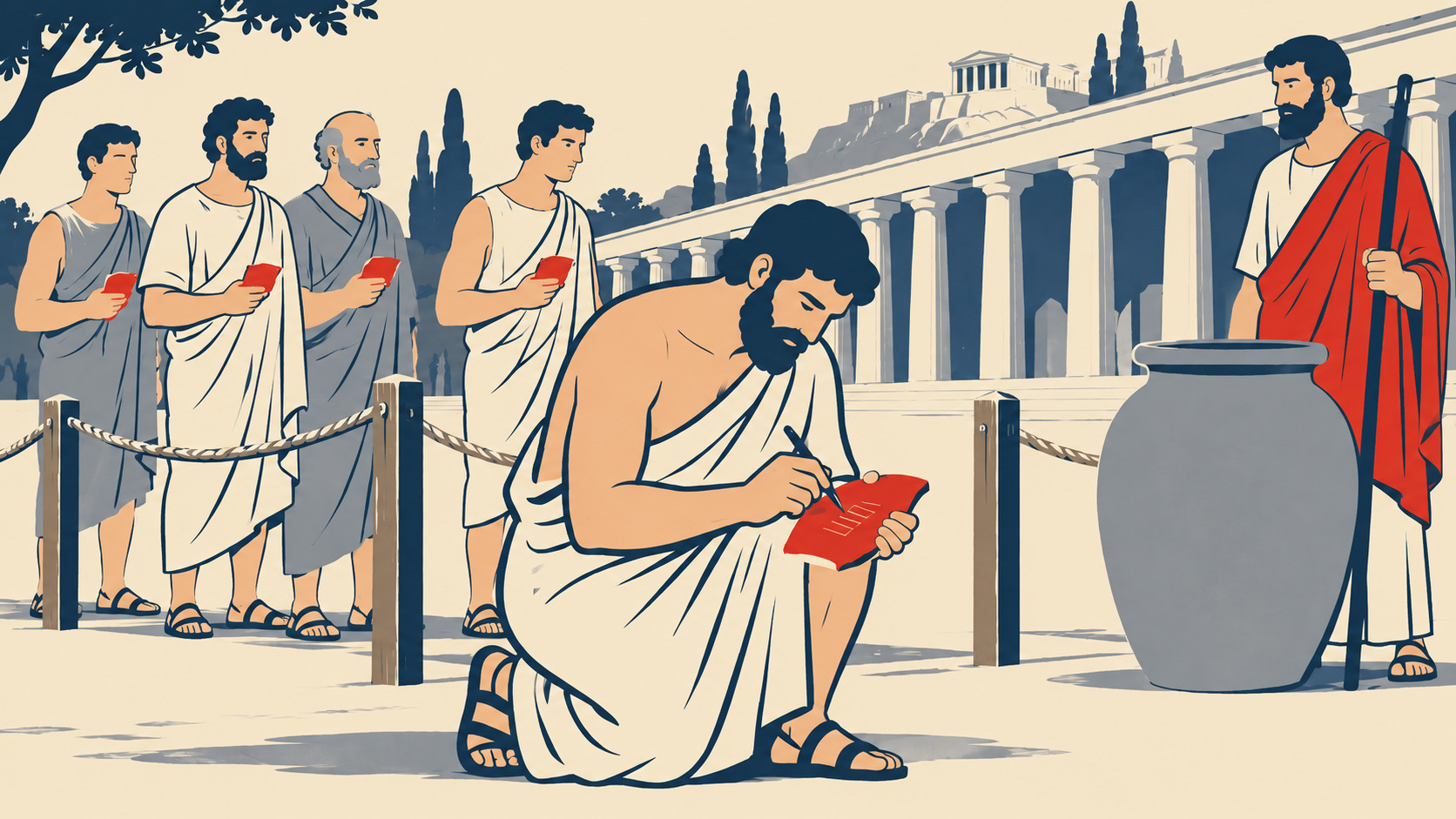
- Ostracism
- the Athenian vote in which citizens wrote a name on a pottery shard, and the man named most often, with at least 6,000 votes cast, was exiled for ten years.
Cause-and-Effect Chart
| Key Fact | The Cause | The Effect |
|---|---|---|
| 99.94 percent for the bloc in 1984 | One candidate per seat, and a yes vote needed no booth | Elections showed near-total approval |
| 2,250 deputies in a new Congress | Gorbachev wanted voters to help him get around party officials | 5,074 candidates competed in March 1989 |
| Solovyov lost with no opponent | About 60 percent of voters crossed his name off, and a winner needed more than half | All seven Leningrad party leaders were defeated |
| Debates on live television | The Congress opened on May 25, 1989, before an estimated 100 million viewers | Criticism of the party was heard across the country |
| Article 6 repealed on March 14, 1990 | The party's guaranteed rule had lost its hold | The republics broke away, and the Union dissolved on December 26, 1991 |
Timeline
| Person / Event | Date (AD) | Description |
|---|---|---|
| The Union is founded | December 30, 1922 | Four Soviet republics join to form the Union of Soviet Socialist Republics. |
| Supreme Soviet election | March 4, 1984 | 99.99 percent turnout; 99.94 percent for the bloc's candidates; 109,078 against. |
| Gorbachev becomes General Secretary | March 11, 1985 | The Politburo chooses him to lead the party. |
| The election of the Congress | March 26, 1989 | 89.8 percent turnout; Yeltsin wins 89.4 percent in Moscow; Solovyov loses running alone. |
| The Congress opens | May 25, 1989 | Debates run on live television; Gorbachev elected chairman with 87 deputies against. |
| Sakharov at the rostrum | June 9, 1989 | His microphone is cut off, and he keeps speaking. |
| Article 6 repealed | March 14, 1990 | The Communist Party's guaranteed rule ends. |
| The Union dissolved | December 26, 1991 | The day after Gorbachev resigns, the Union of Soviet Socialist Republics ceases to exist. |
COMMAND QUESTIONS
Factual Recall
The "Why" Questions
Write a short paragraph answering each question in your own words, in your notebook. Then check its box: +4 each.
Why could Yuri Solovyov lose an election in which no one ran against him? Use the rules of the 1989 ballot in two or three sentences.
In 1984 the bloc's candidates won 99.94 percent; in 1989, 38 regional party secretaries lost. Using the text, explain how the private booth helps account for the difference.
Cast Your Ballot
you are a Moscow voter on March 26, 1989 — in a private booth, cross out the name of every candidate you vote against and leave only your choice; a winner needs more than half of the votes cast
Loading…
The ballot: 1989 — People's Deputy of the USSR, Moscow (cross out every name but your choice)
Boris Yeltsin — Communist Party member, running against the party's official choice — former party chief of Moscow, removed in 1987; campaigned against privileges for top officials and the failures that left store shelves empty
Yevgeny Brakov — Communist Party, with the open backing of the party establishment — director of an automobile factory that built limousines for senior officials; a loyalist of the party line
What a voter knew on March 26, 1989:
- This was the first national election in seven decades to offer Soviet voters a choice of candidates.
- Yeltsin had been removed as Moscow's party chief in 1987.
- On March 19, several thousand Yeltsin supporters had marched through central Moscow.
- The party establishment openly backed Brakov.
- Every voter would mark his ballot in a private booth.
What the voters decided: Boris Yeltsin, 89.4 percent; Yevgeny Brakov, 6.9 percent. Yeltsin was elected.
Cast your own ballot on MockElection.com — vote as a citizen of Moscow in 1989, with only what a citizen of Moscow in 1989 knew. Then compare your count to history.
In 1989 a Soviet voter could reject a candidate who ran alone by crossing out his name, and the candidate lost if more than half did. Should every ballot give voters a way to say no?
Two games wait below
Whistle-Stop
The lesson’s words, against the clock. Twelve in a row earns the Blue Ribbon.
The Canvass
Match each cause to its effect, then each event to its year. Both boards with one miss or fewer earns the Clean Count.
0 of 100 points
Kept in this browser for this visit. Sign in to keep it on any device.